SKF
July 2022 - July 2023
Wherever there is rotation, SKF is there to make it all run a little smoother. From starting your car to the hum of your washing machine, SKF products and solutions are there to contribute to a life with less friction. But the impact is not limited to the everyday conveniences. For over a century, SKF has been indispensable in industrial life. They continue to develop bearing technologies that support progress and contribute to a better future.
UX Tools: Sketch & Figma.
UX Methods: User research group, User stories, User flow, Behaviour testing, Design system, Mobile design, Data Analysis and A - B Testing.
"The reality is that engineers are making countless micro-design decisions that your design spec didn't account for. Empower them to be designers and share your design principles,"
The case
In this case, as a Designer, I was challenged to improve the bearing selection process. It's a rather complex tool that only SKF engineers know how to operate. The goal is to make it not only more user-friendly but also more accessible to those with less knowledge in this area. Together with my user group, which consists of SKF engineers, we explored how the application could be improved without having to make too many adjustments. The challenge lies primarily in satisfying both target groups: making it user-friendly and not too complicated for the older generation, while making it more accessible for the group that has less knowledge of the product.
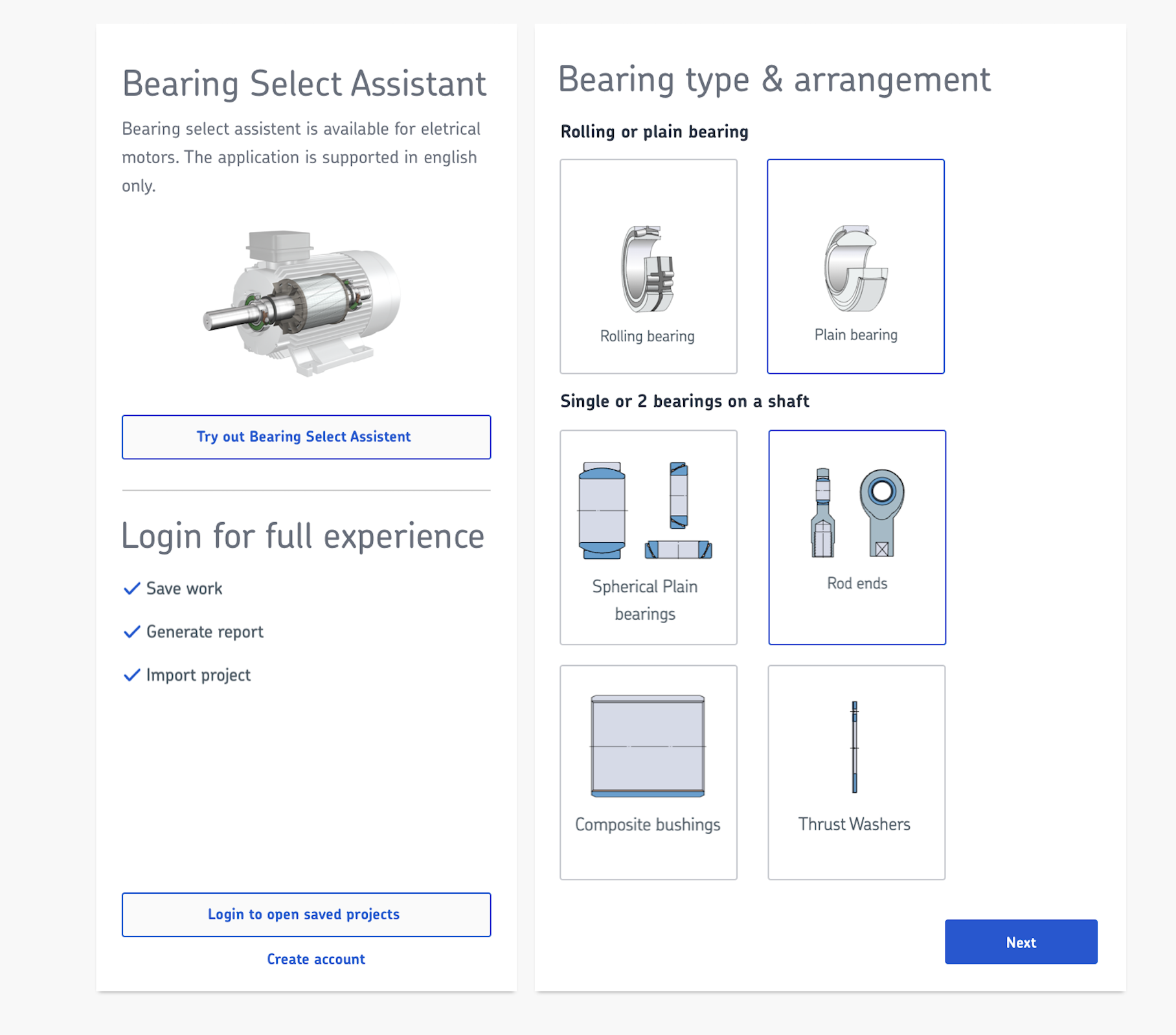
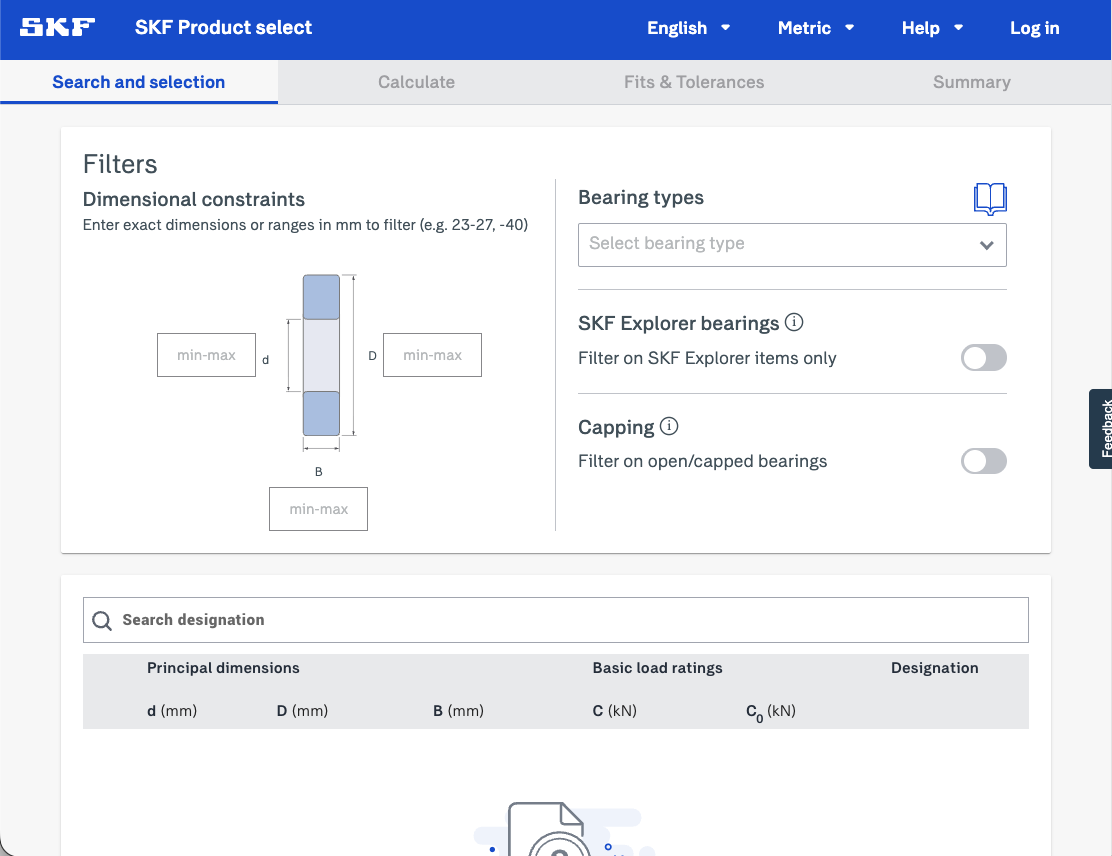
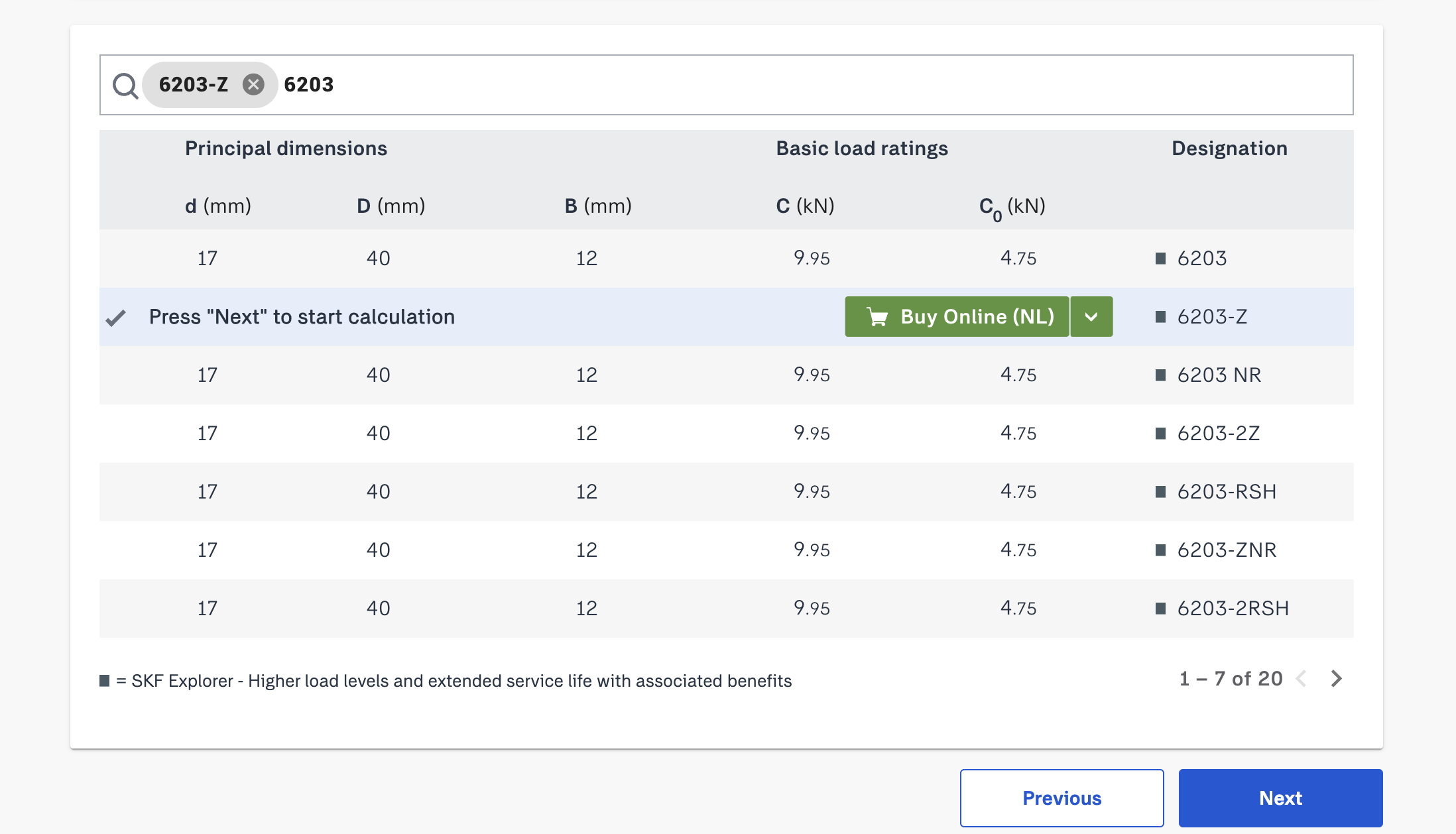
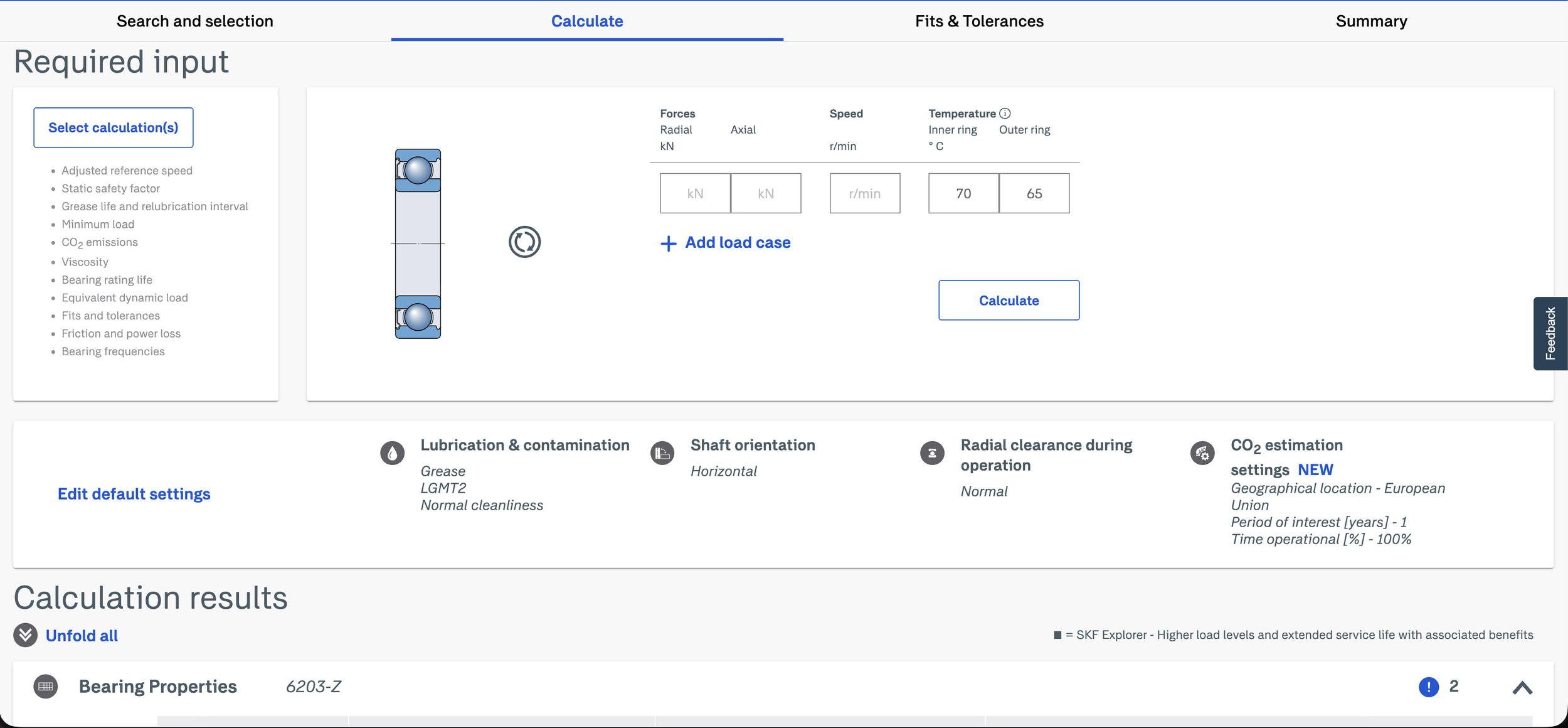
The improvements made in Bearing Select
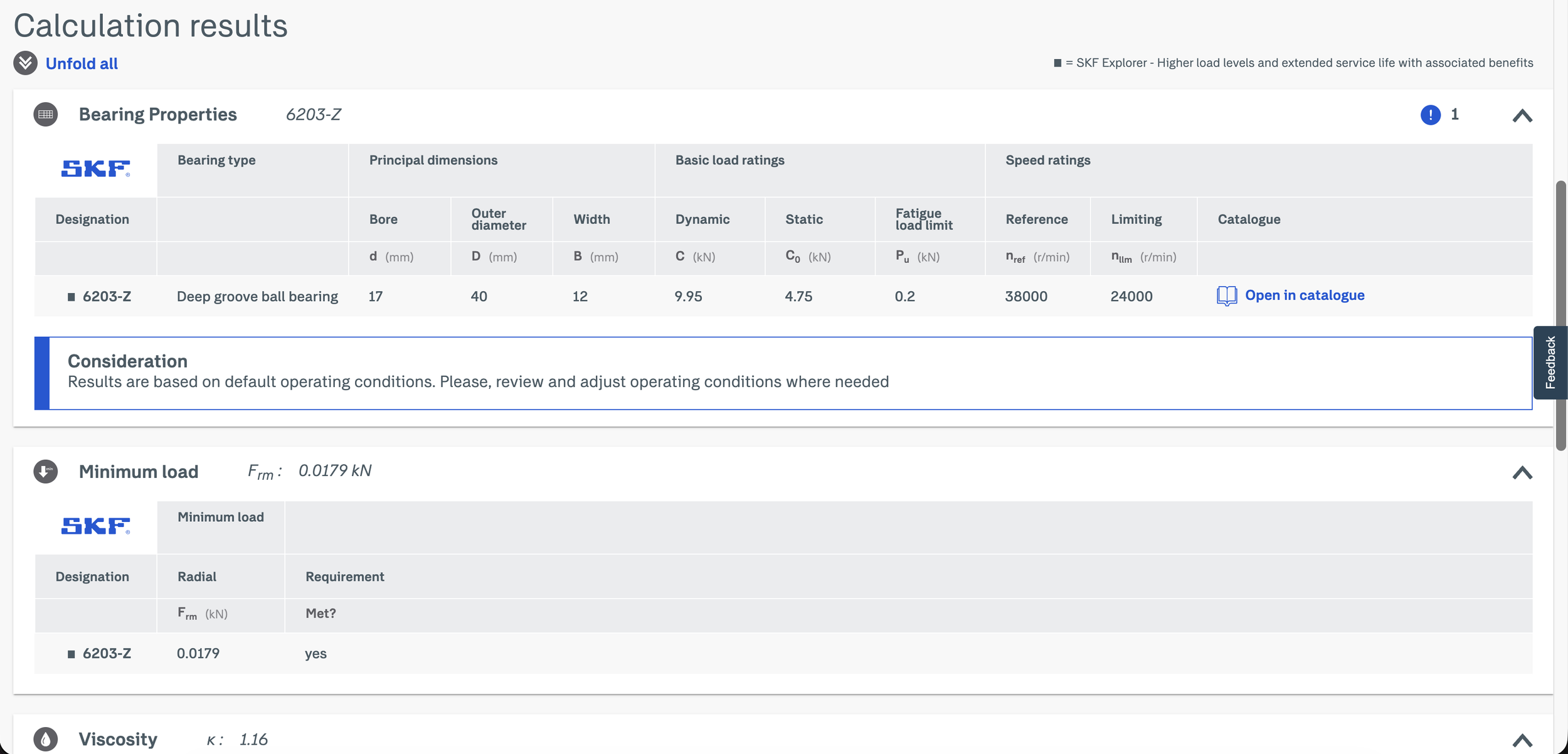
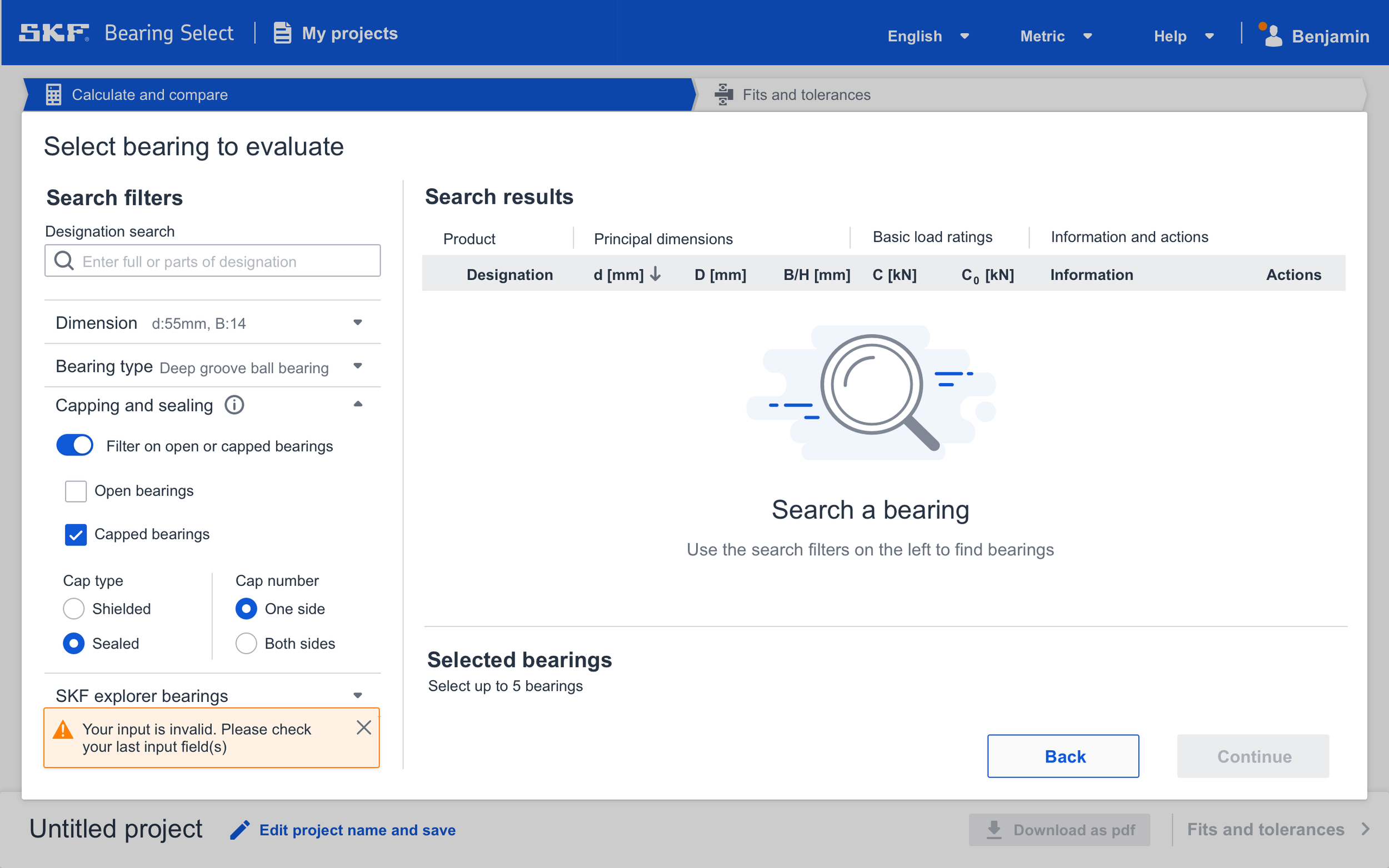
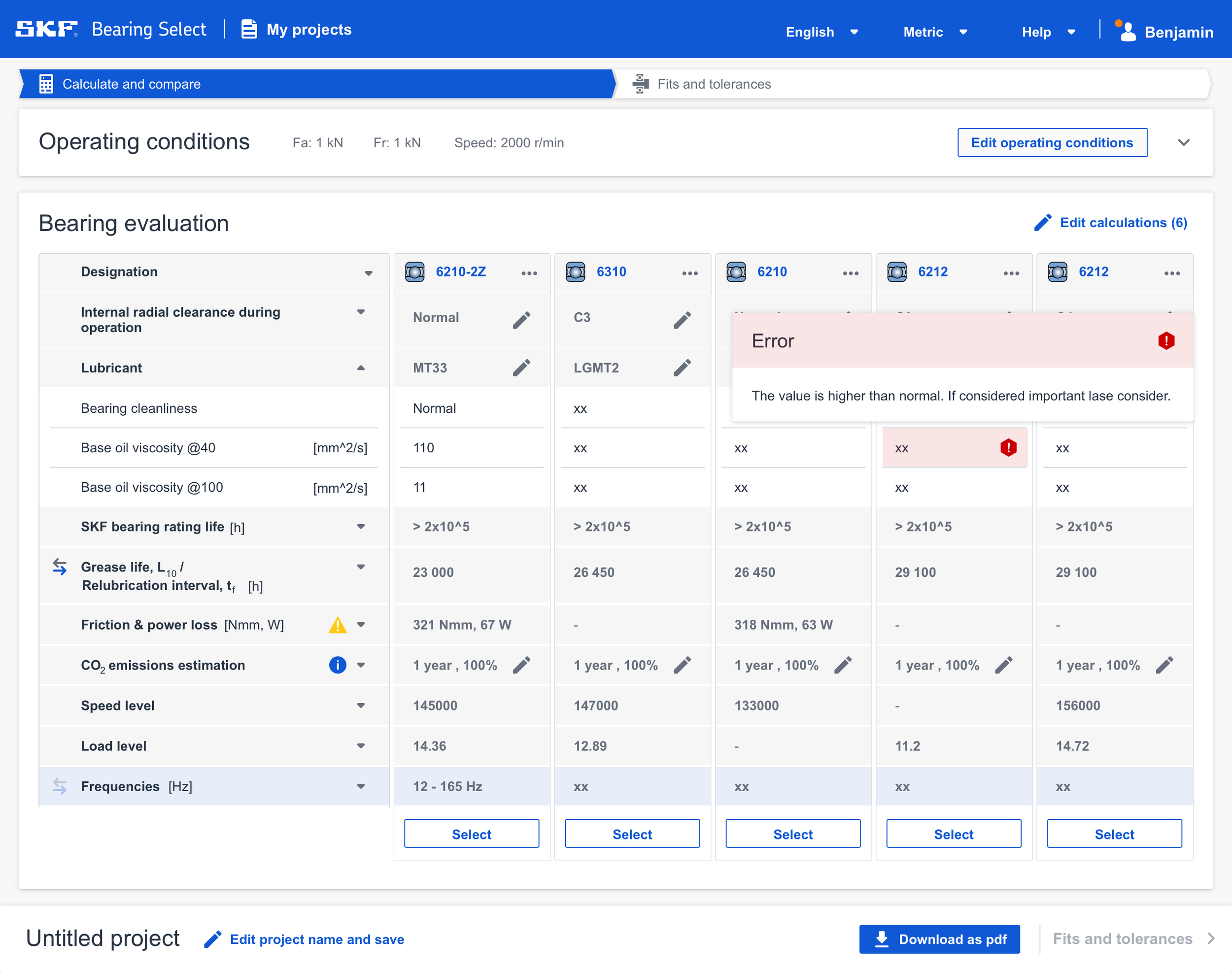
One of the biggest improvements in this redesign was making better use of the available screen space. The goal was to give engineers a clean, focused overview of everything related to bearing selection. We decided to remove the scrollbar entirely so the interface would feel more like professional software that engineers use every day, rather than just another web tool.
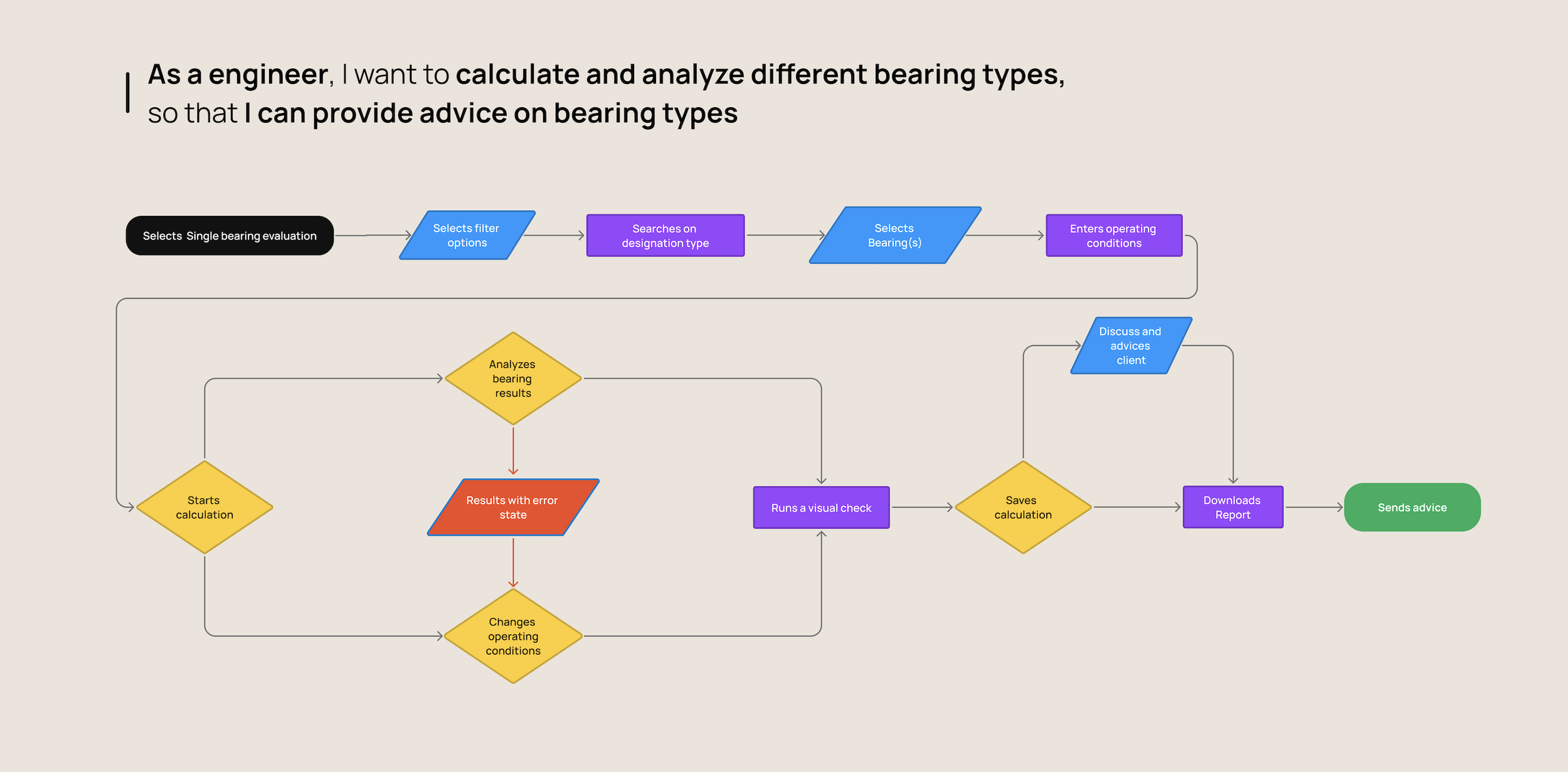
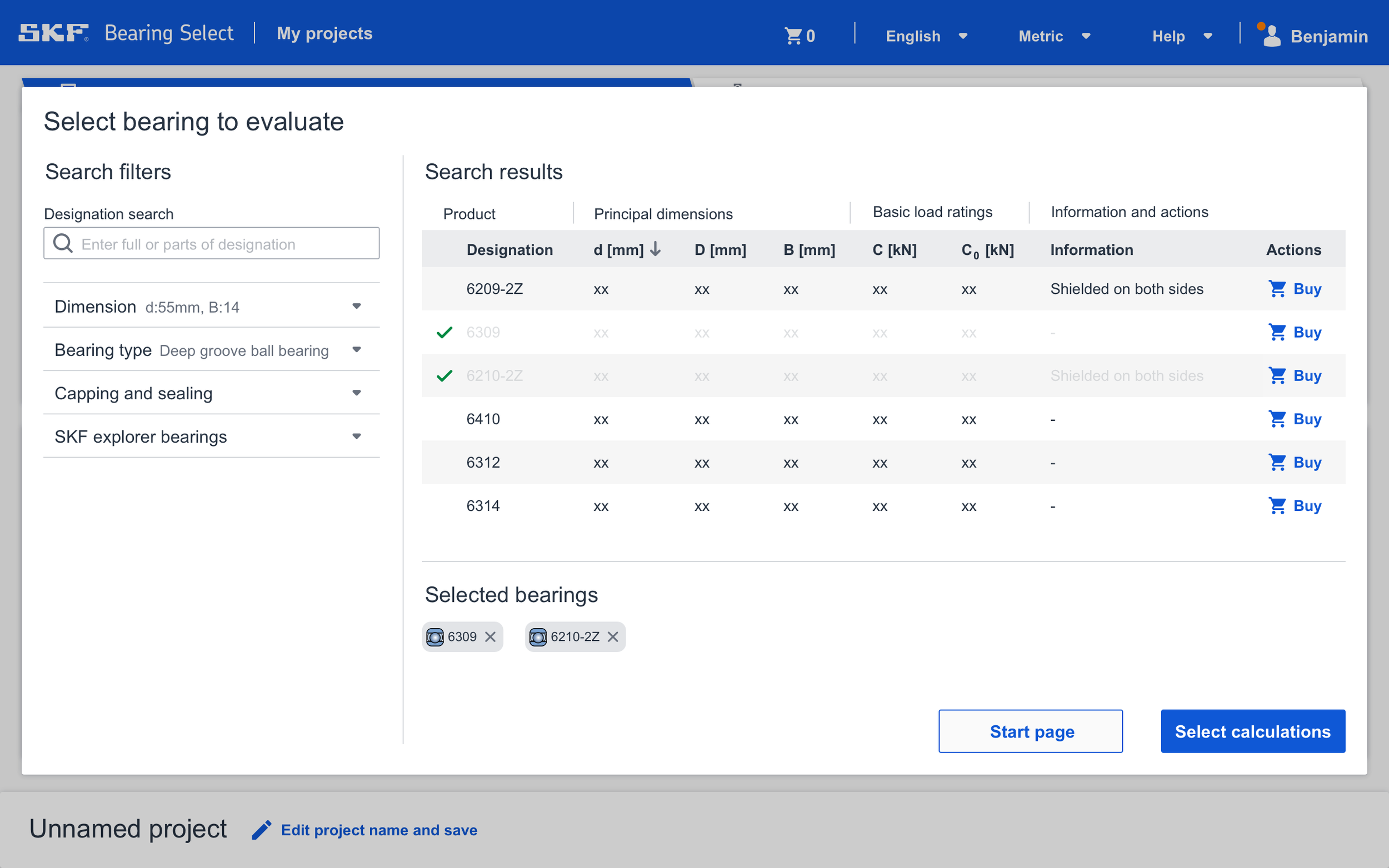
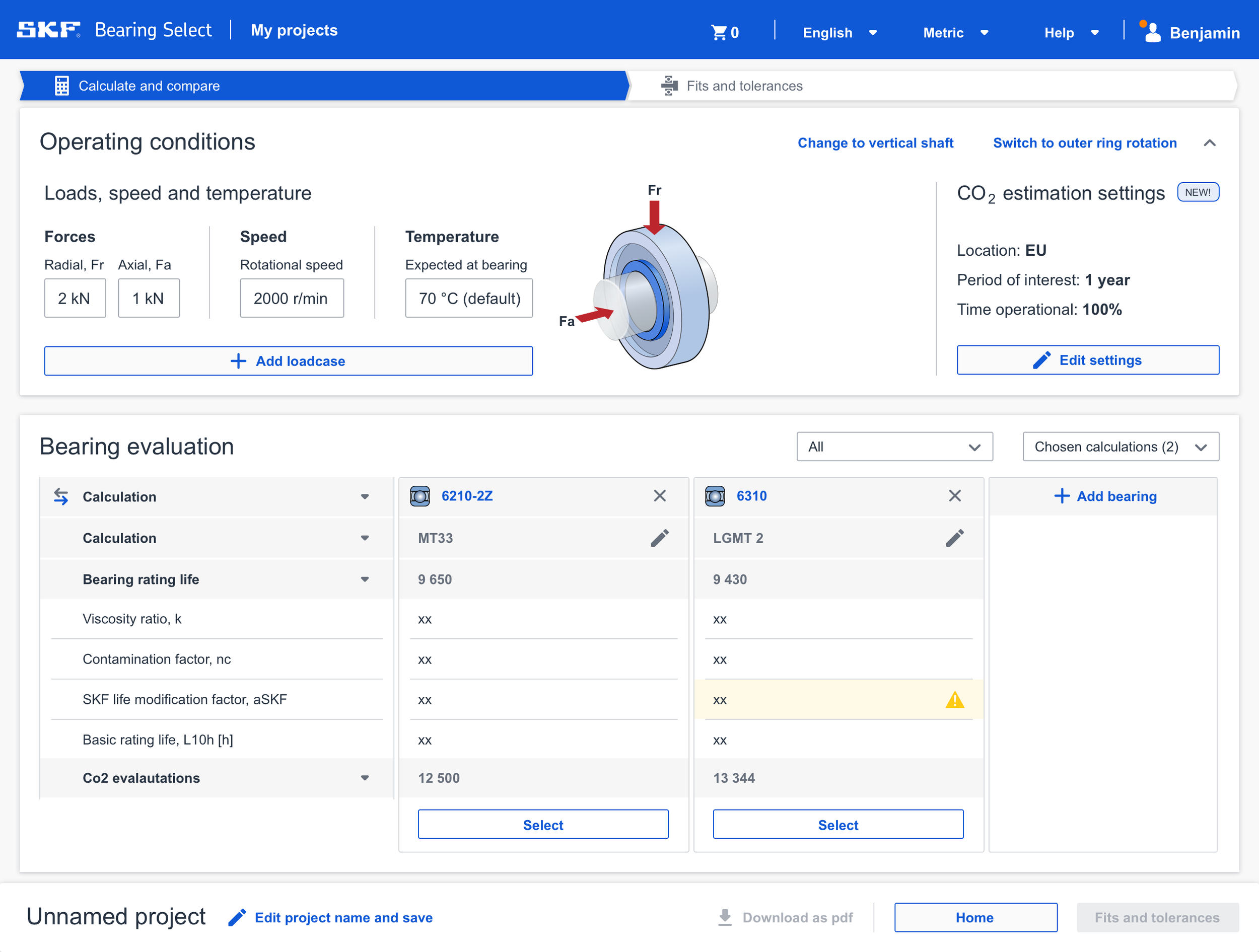
While the overall flow of the tool stayed the same, I restructured it to make the process feel more intuitive. Based on feedback from several engineers, we combined the entire selection process into a single pop-up window. This separation helped keep the focus on what really matters, the calculations. In the calculation and results view, I paid special attention to maintaining both input and output on screen at the same time. Since engineers often tweak parameters and instantly compare results, it was important that this back-and-forth interaction felt effortless.
A key design challenge was how to present the results. Instead of stacking them vertically, I arranged them horizontally. This layout not only feels more natural to scan but also supports quick side-by-side comparison of different bearing types. The result is a smoother and more visual workflow that matches how engineers actually think and work.
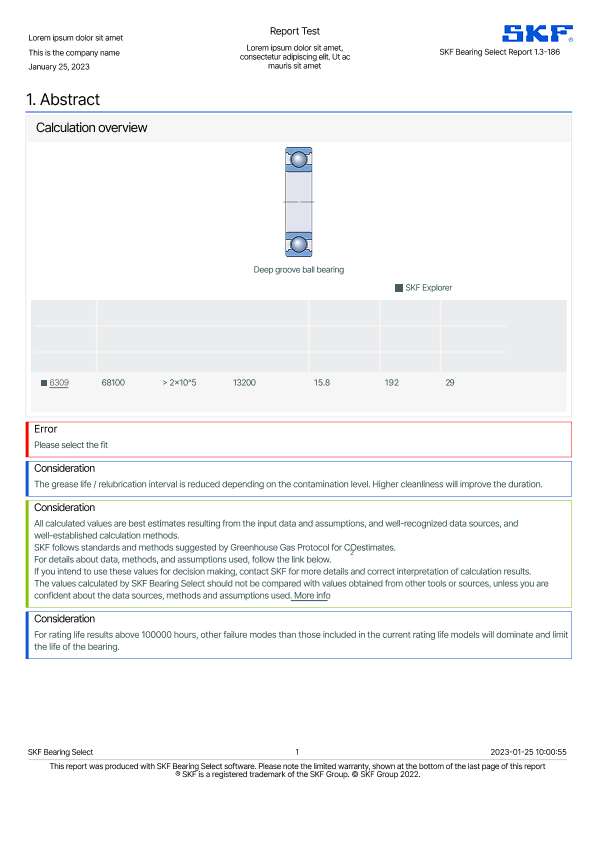
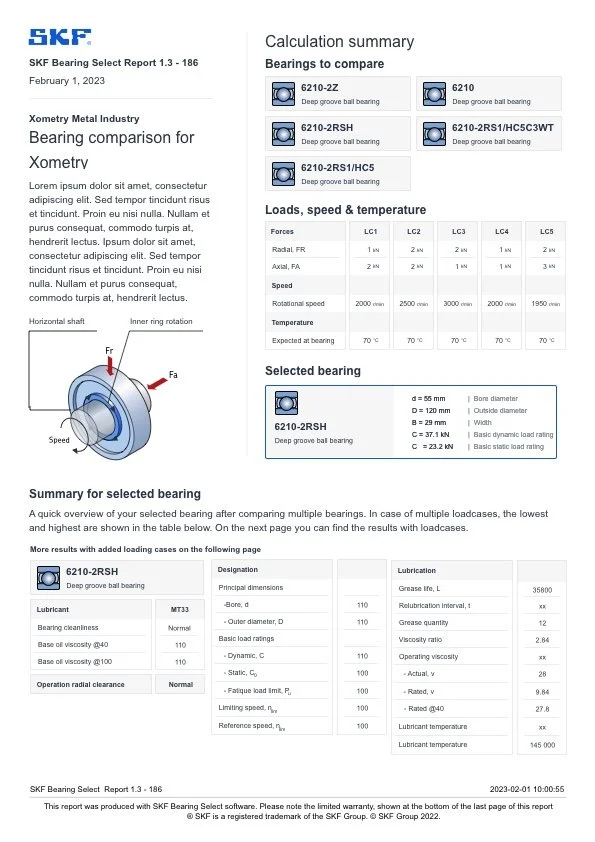
Finally, each calculation generates a report, summarizing the inputs and outcomes for each bearing. I simplified the report’s structure and language so that customers receiving advice could easily understand it too. This way, the tool doesn’t just help engineers work faster, but also helps them communicate their expertise more clearly.
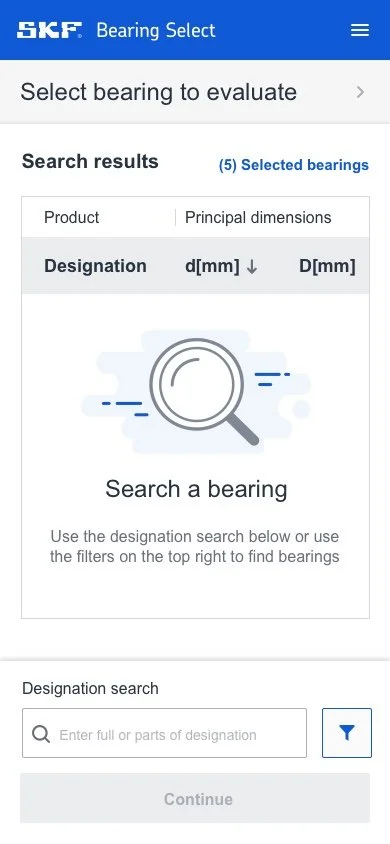
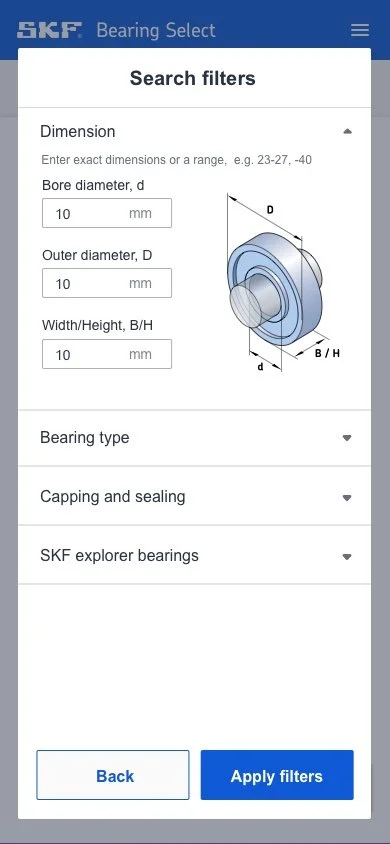
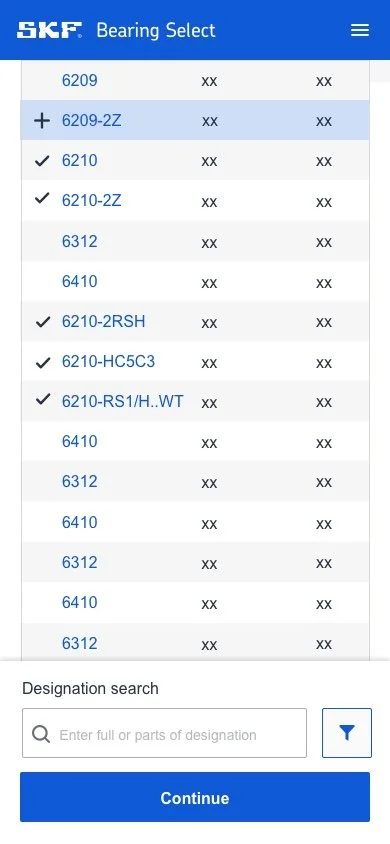
Bearing Select Mobile
During my research, I discovered that engineers often provide on-site consultations for customers. Advising them on bearings, lubricants, and temperature conditions. They usually bring their laptops, but many, especially younger engineers, expressed a clear need for a mobile version of the tool. They wanted something lightweight and accessible that could support them directly in the field.
This insight shaped one of the project's main goals: enabling engineers to perform quick, accurate calculations on-site and provide tailored recommendations instantly.
Translating the complexity of the web tool to a smaller screen proved to be a real design challenge. The web version already had a lot of detailed calculation data, and bringing that to mobile risked overwhelming the user. To tackle this, I worked closely with several engineers to identify which information was truly essential in the field.
By focusing only on what engineers actually use during consultations, we were able to make the bearing cards more compact and purposeful. Every data point shown now directly supports their goal, helping them provide clear, confident, and personalized advice to customers.