Deltares
July 2023 - Dec 2024
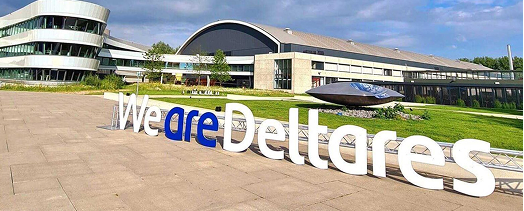
As a knowledge institute, Deltares has been providing reliable expertise in the field of water and subsurface for almost a hundred years. The unique combination of their knowledge and research, together with our experts, experimental facilities, key technologies, specialized software and data products, enables them to advise policymakers and the busi- ness community and to address the challenges the world faces today.
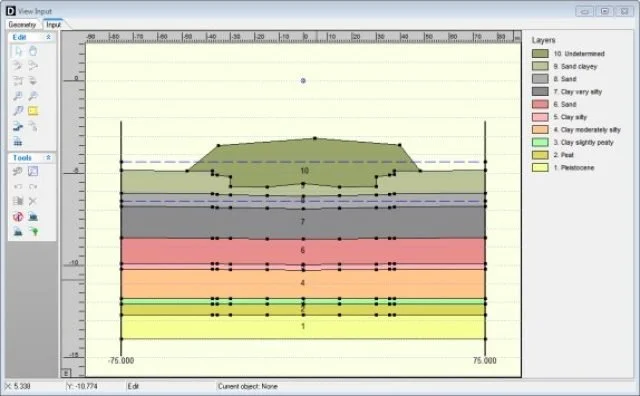
At Deltares I had different roles as a UX Designer. They have an ongoing project; D-stability where a lot was already designed. Together with my UX colleague from Alten we finished the look from the application. My second task was to renew the D-settlement application that is connected to D-stability. The two applications work together to show the subsidence and stability of a particular dike. This allows them to see at an early stage what the lifespan of the dike is before it breaks.
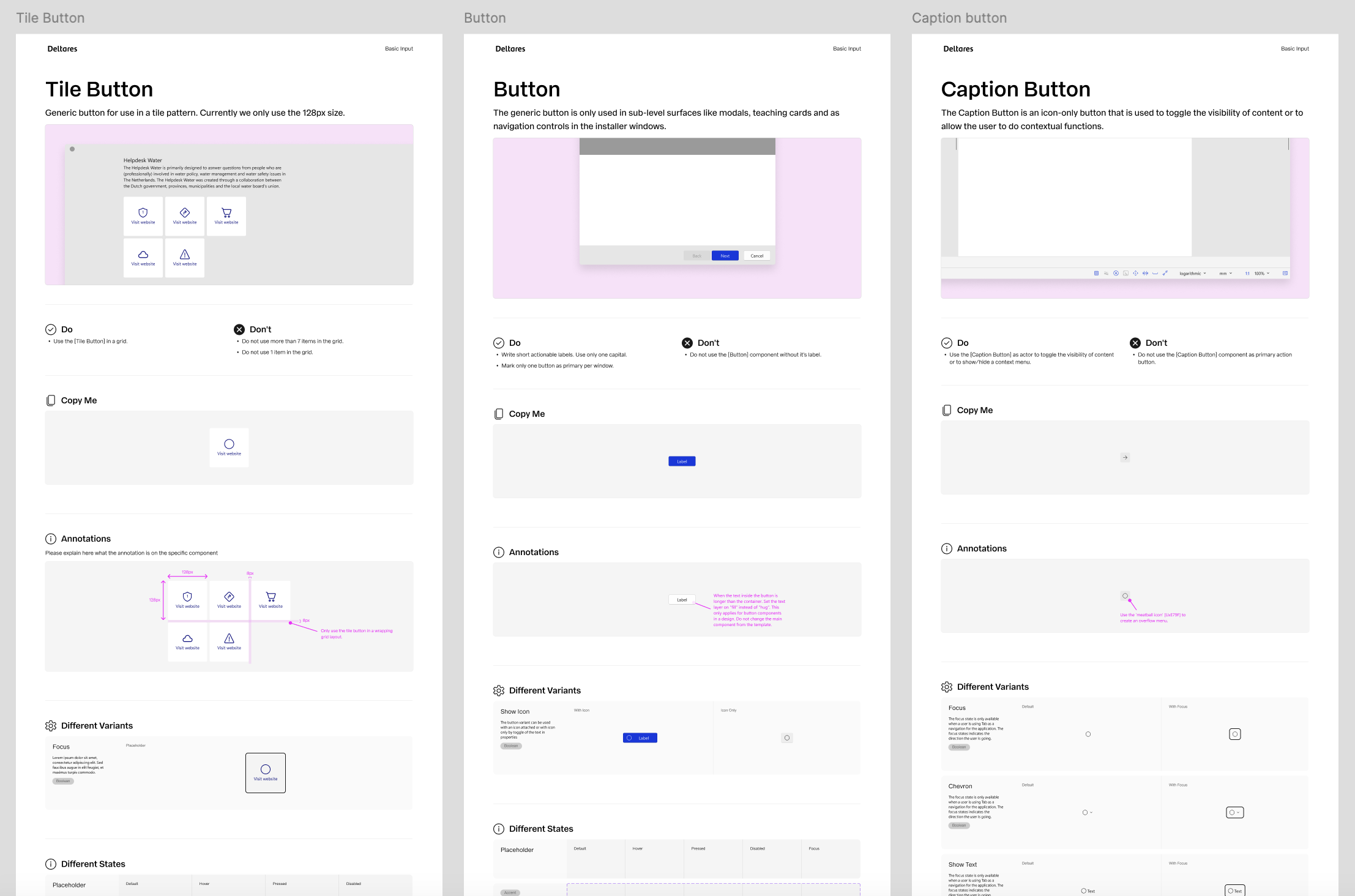
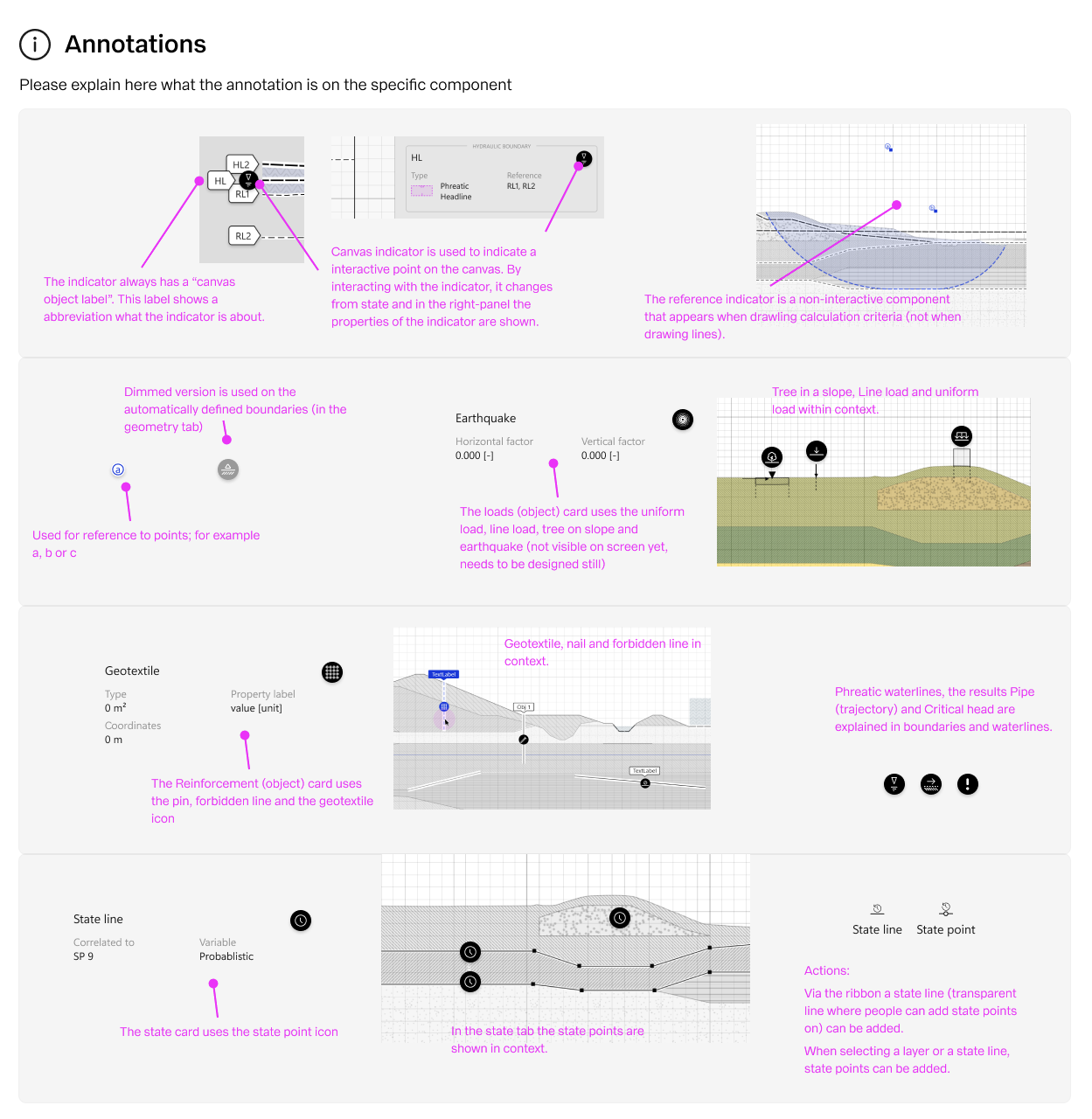
In order to bring the different applications closer together, I have set up a Design system. Everything that has to do with the design of the applications is documented in the Design system. How it looks, the functionality but also what the possibilities are. Together with a structure for the language, communication, and guidelines, this is a solid support for the team in the future.
UX Tools: Adobe XD, Figma, Miro & Jira
UX Methods: User group, User research, Personas and User stories, User flow, Critical thinking, User testing, User-day notes, Design systems.
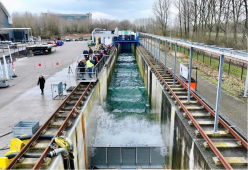
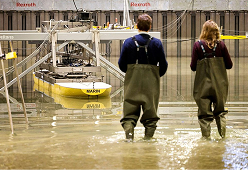
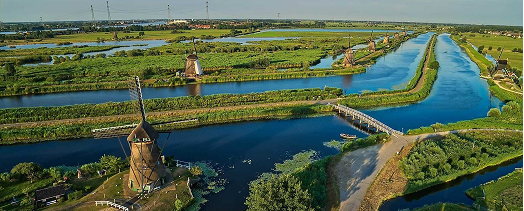
I DON’T DESIGN THE APPLICATION FOR THE USER, BUT WITH THE USER.
The discovered problem
The current application, D-settlement, is very outdated. The application is very complex and, therefore, difficult to explain to new users. Many engineers, who have worked with it for many years, have found their own way to achieve the results they want. My task as a UX consultant is to investigate who the users are, who the stakeholders are, and how we can bring the new version of D-settlement to a higher level. Together with a couple of Dutch engineers, I started a user group. Not only to understand the usage of the application more, but also to get new insights and test a few concepts later on.
The hardest part of the journey was understanding the product myself. Since I do not have an engineering background, it was sometimes a challenge to level with the engineers on the product they are using.
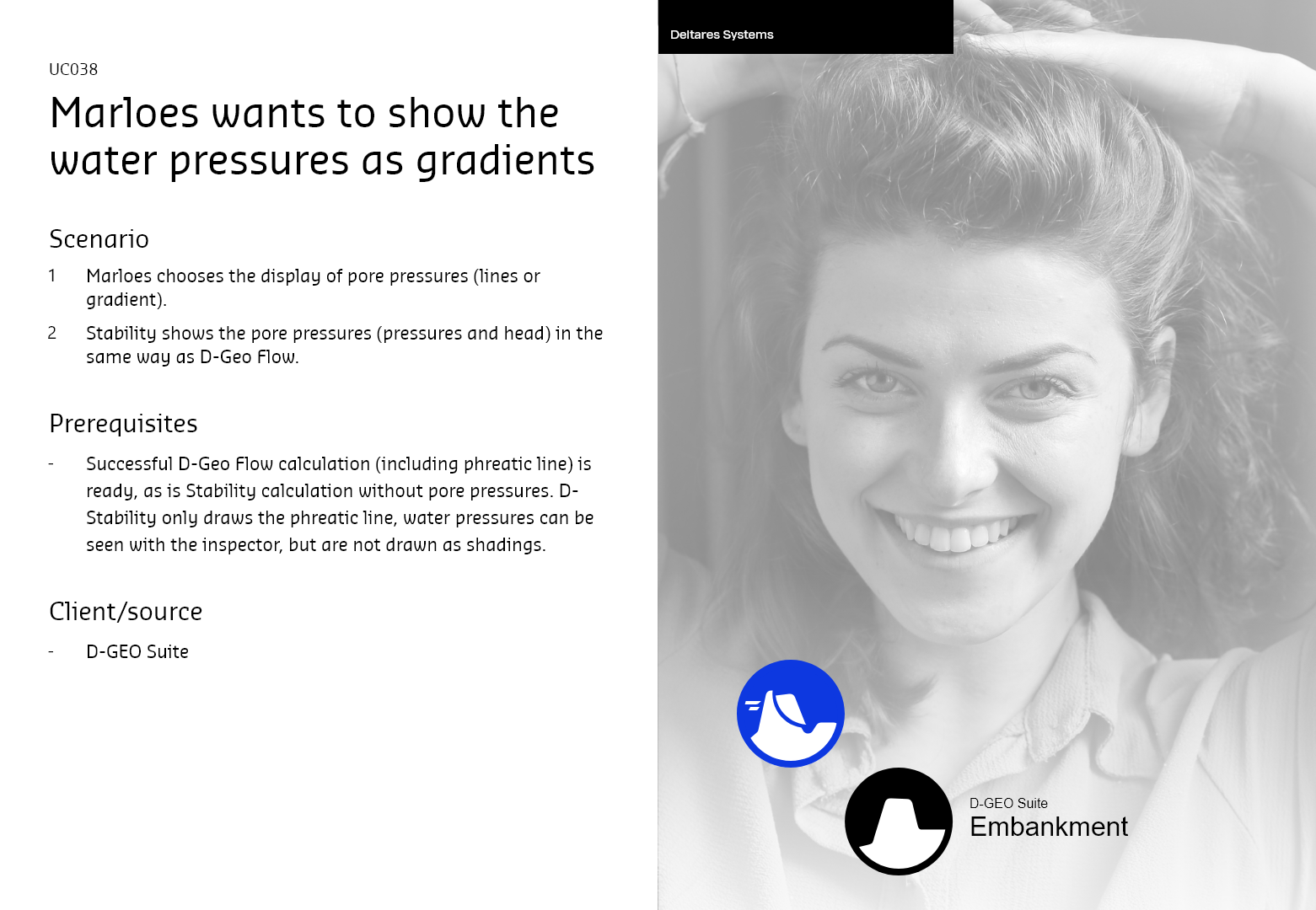
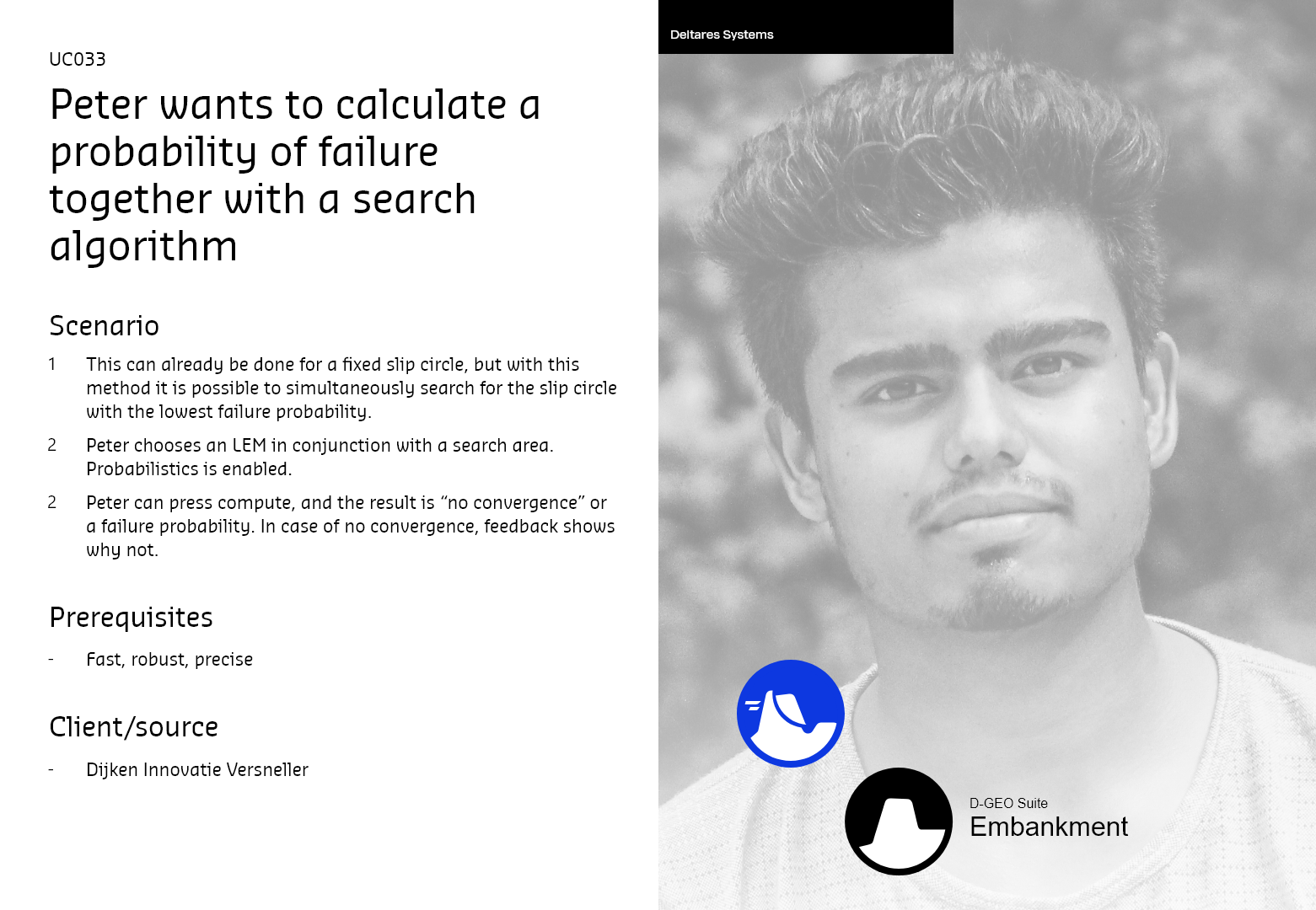
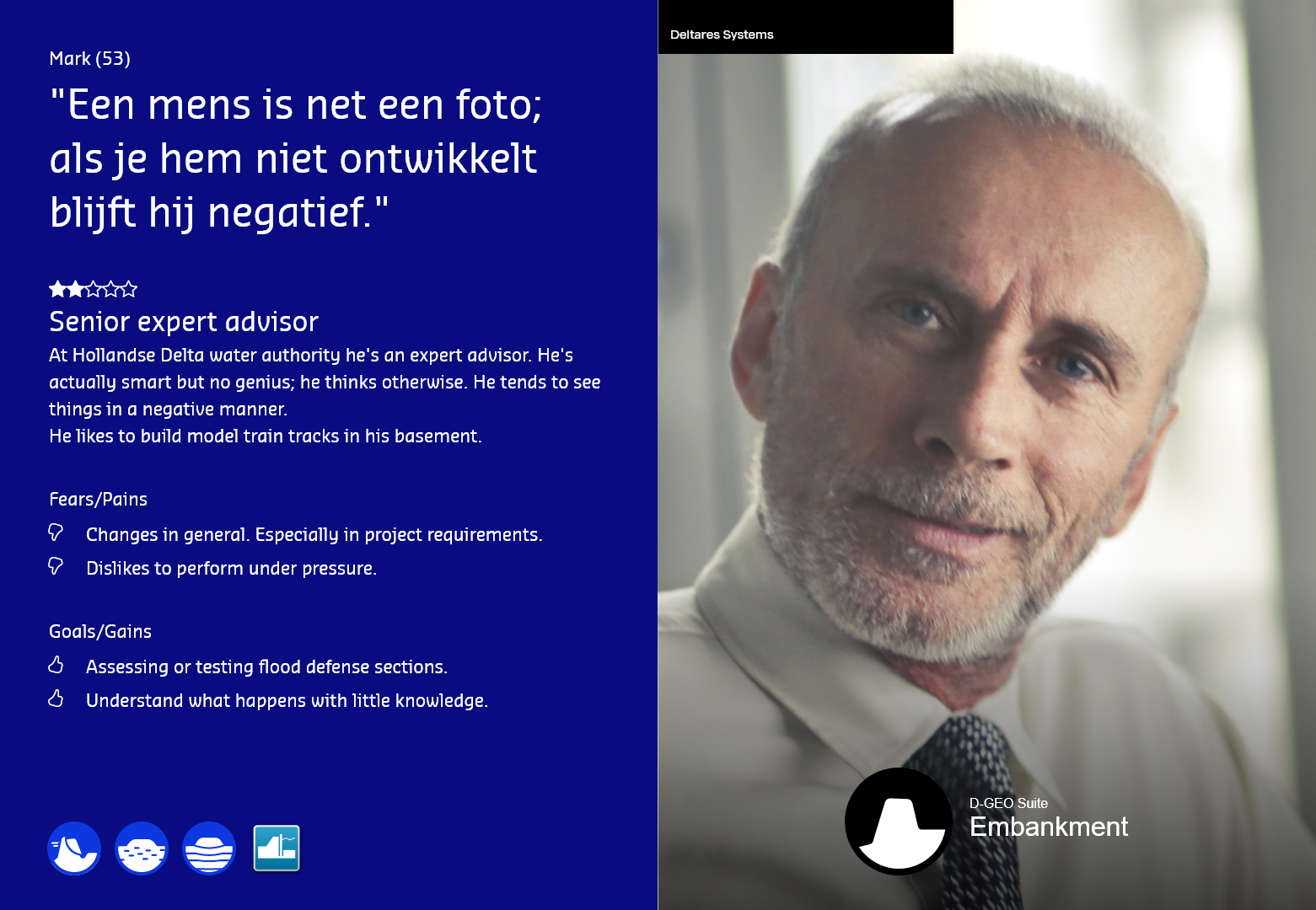
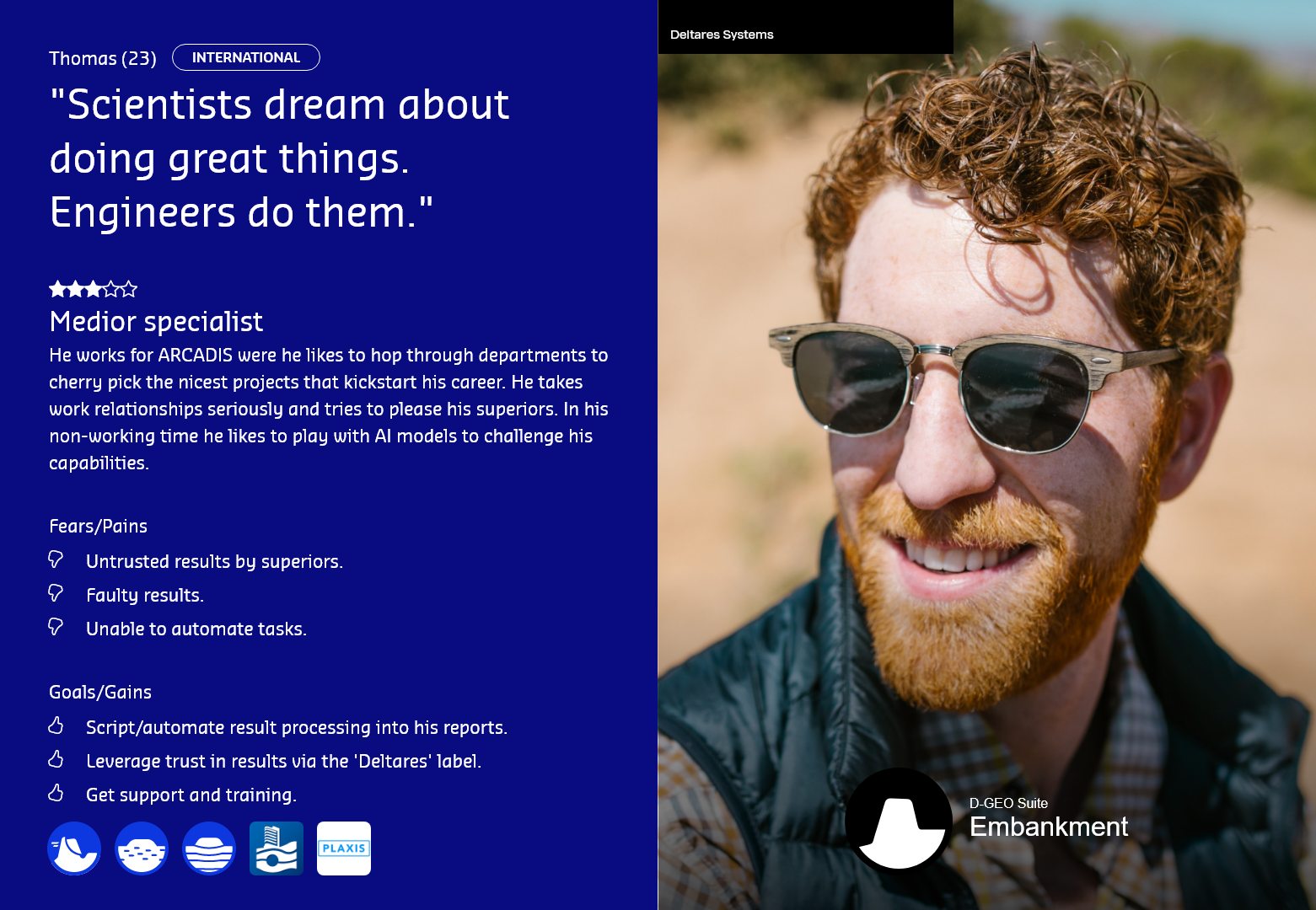
Research and Personas
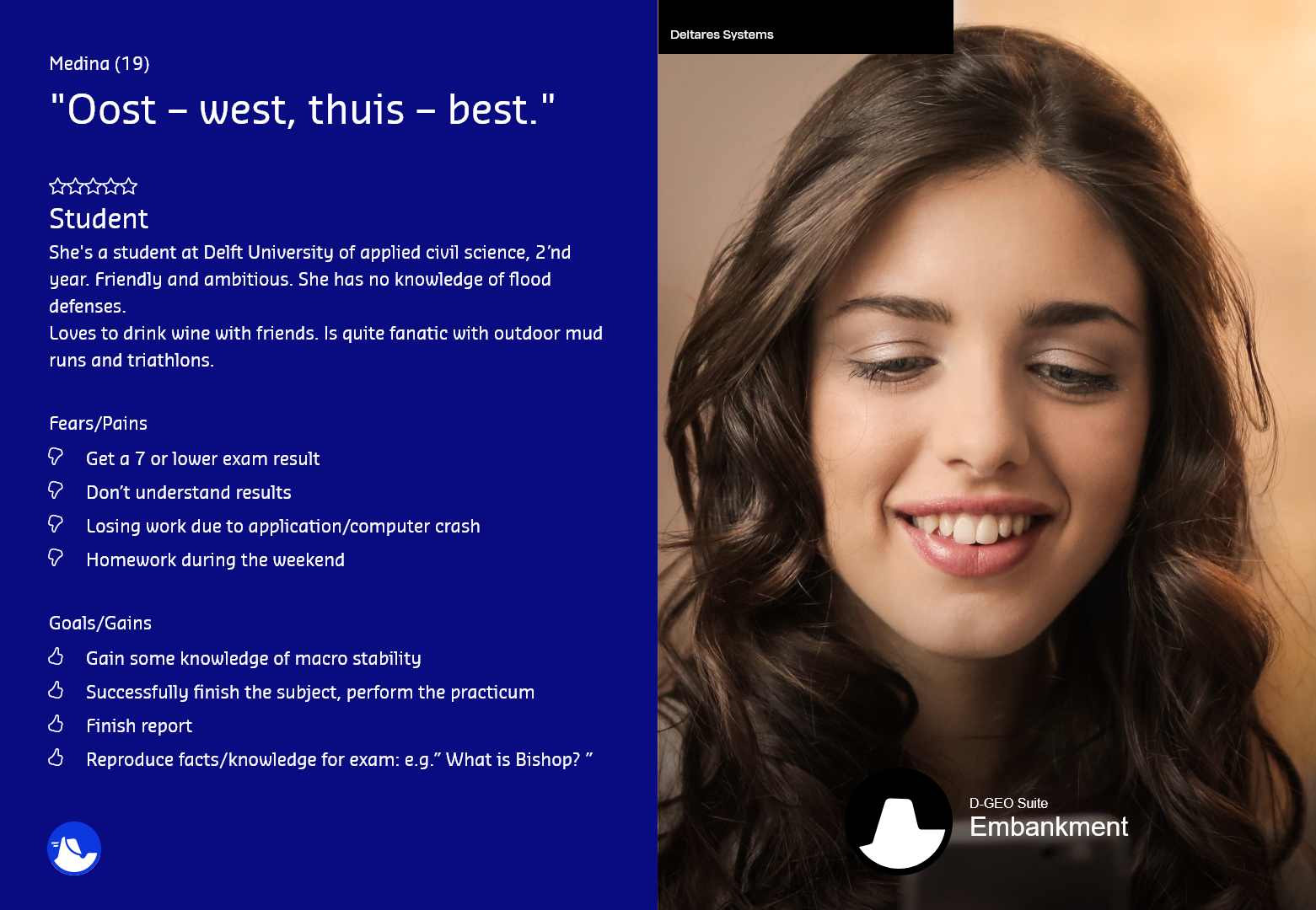
During the user group sessions, we uncovered valuable insights into why the new application plays such a crucial role in Deltares daily work. One of the main challenges we identified was the inconsistent user experience. There were many different ways to navigate and use the tool. As a result, engineers often struggled to onboard new colleagues or university students, making the learning curve unnecessarily steep.
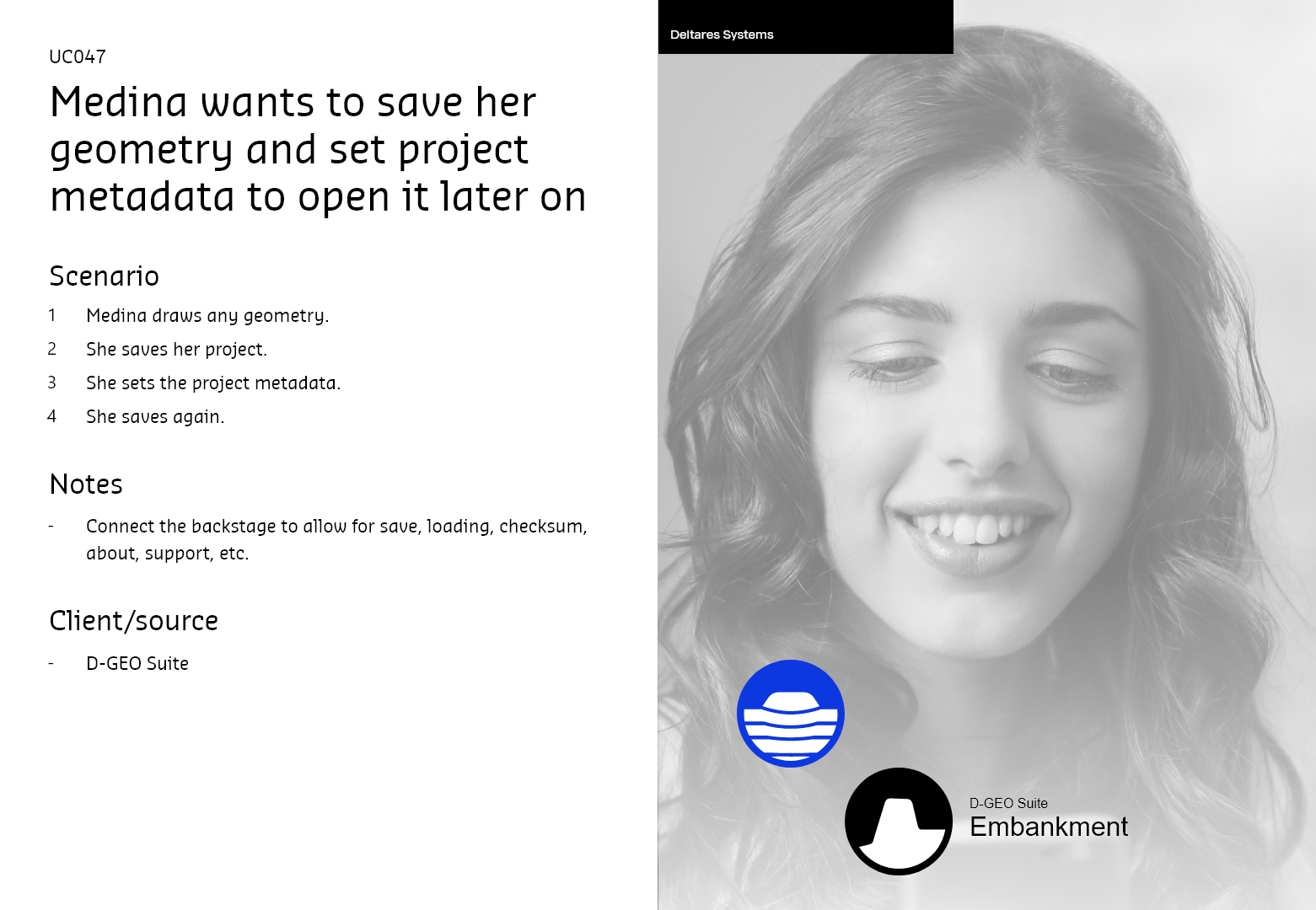
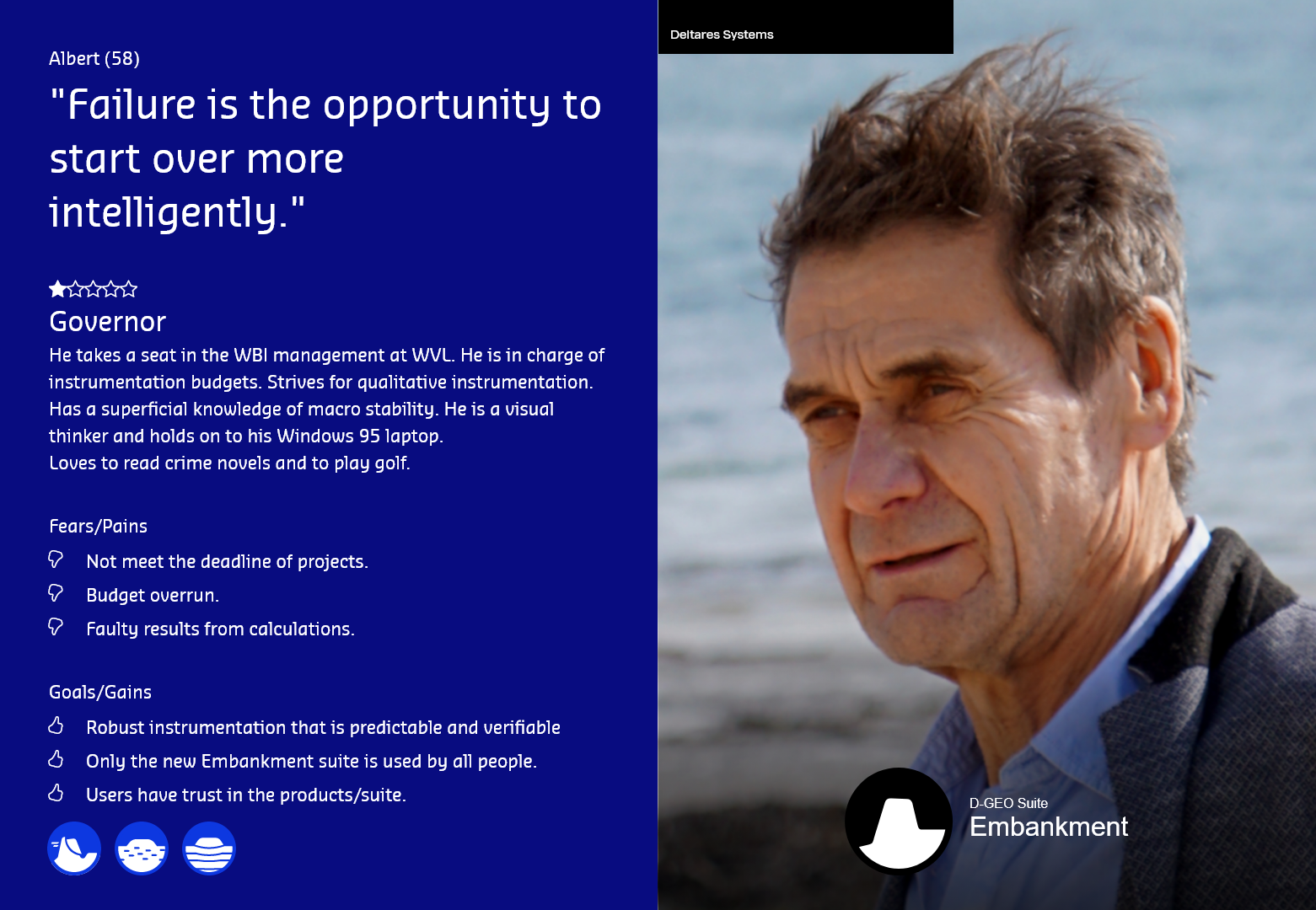
Based on these findings, our UX team developed detailed personas to better understand the needs and pain points of different user types. This helped us design a guided onboarding flow that provides step-by-step support for new users. By integrating this user-centered approach, we made the application more intuitive, consistent, and easier to adopt across different user groups.
I was responsible for conducting user research, creating personas, and translating insights into design improvements that enhanced the overall usability and onboarding experience.
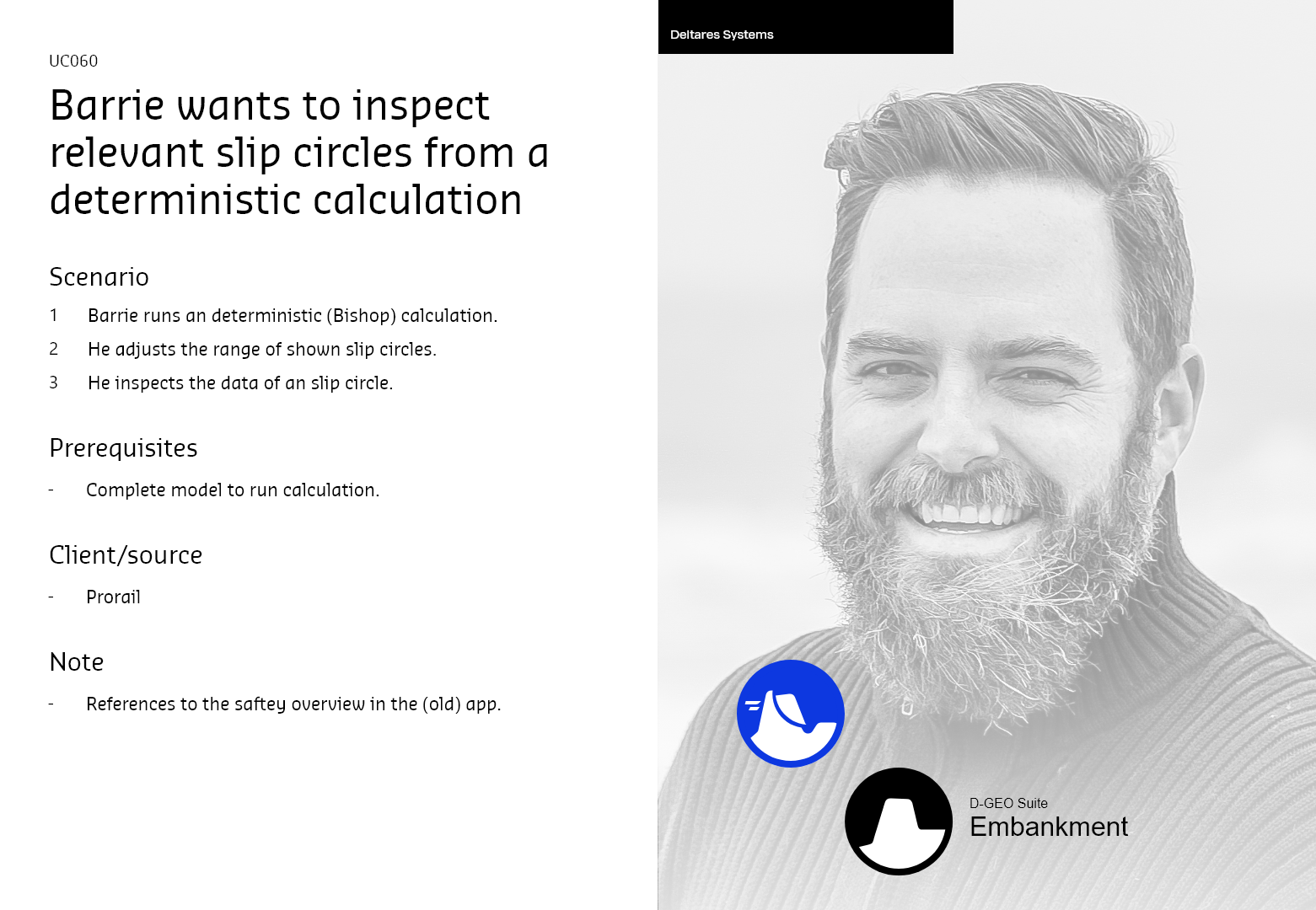
Product specific user stories for creating features and new designs for the future.
Stakeholders
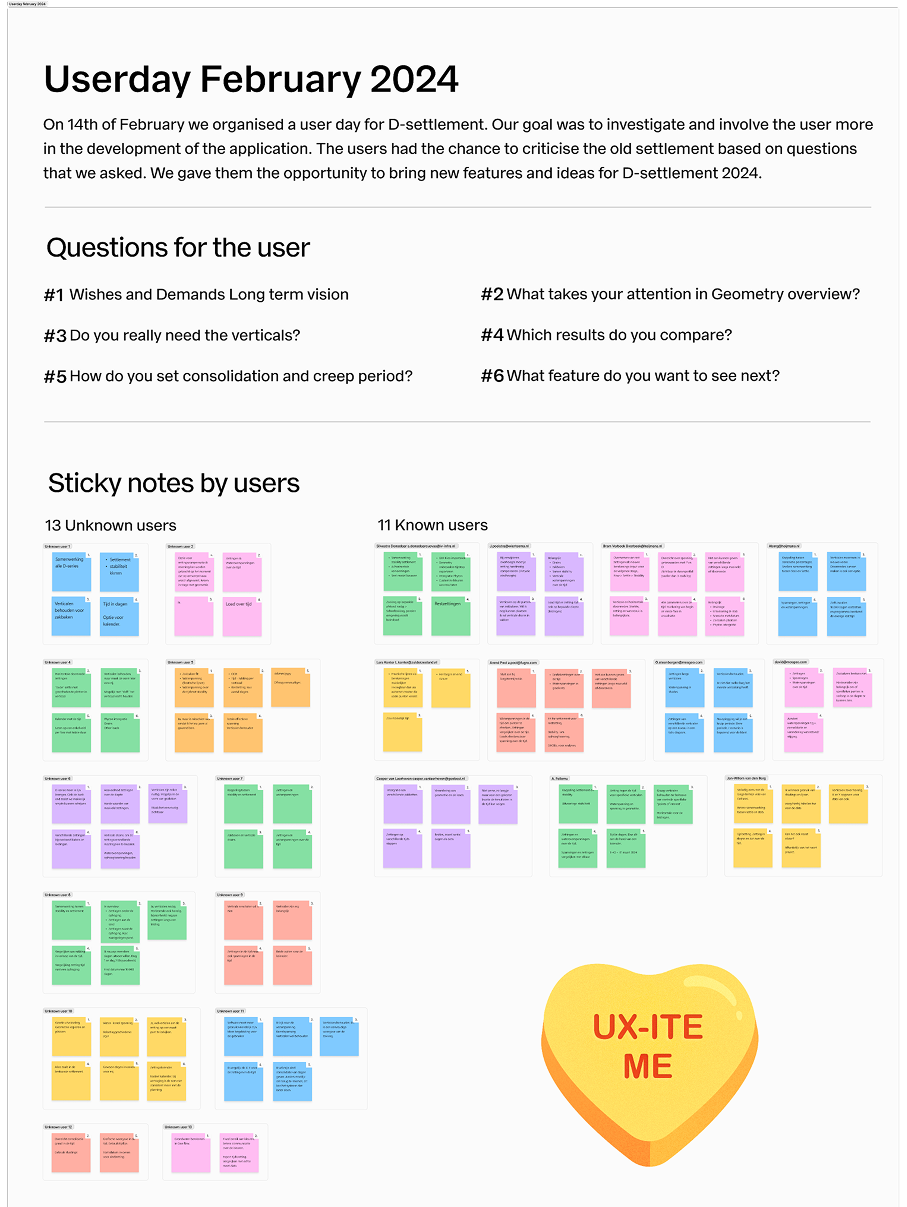
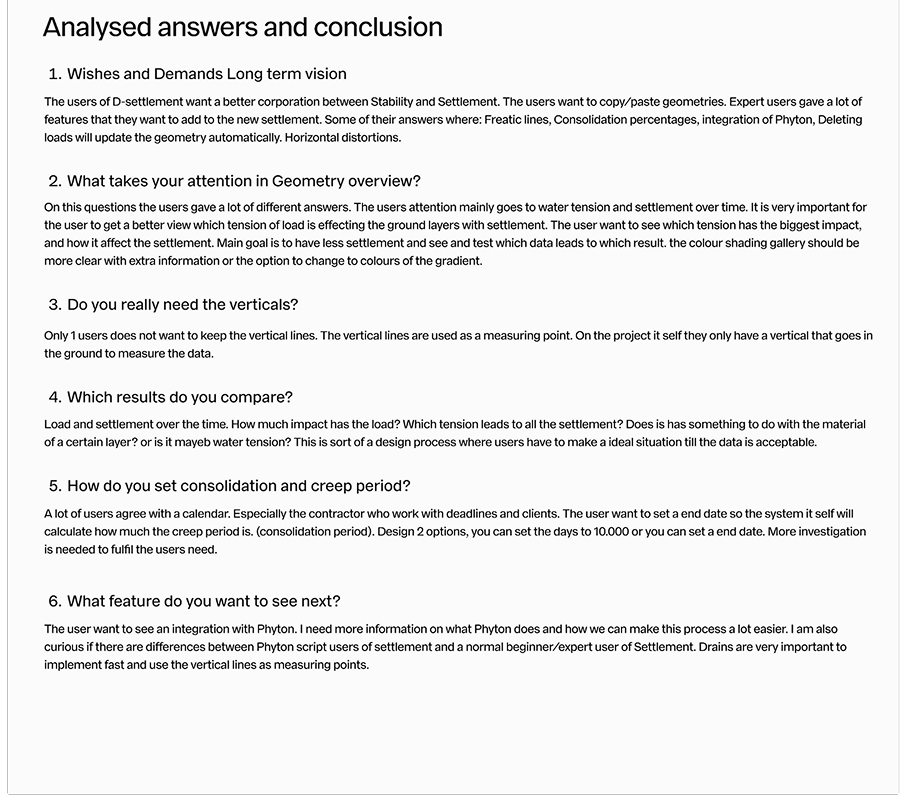
To get some more answers from not only Engineers but also stakeholders like Rijkswaterstaat, I organized a user day at Deltares.. This gave me not only the opportunity to make the user group bigger, but also gave me a lot of answers from construction companies to create new insights on how they use the product of Deltares. We also asked the participants to come up with new functionalities for the application. This way, I can make an overview of who finds what important within the application so that we can investigate and develop this in the future.
Improved Application
D-settlement
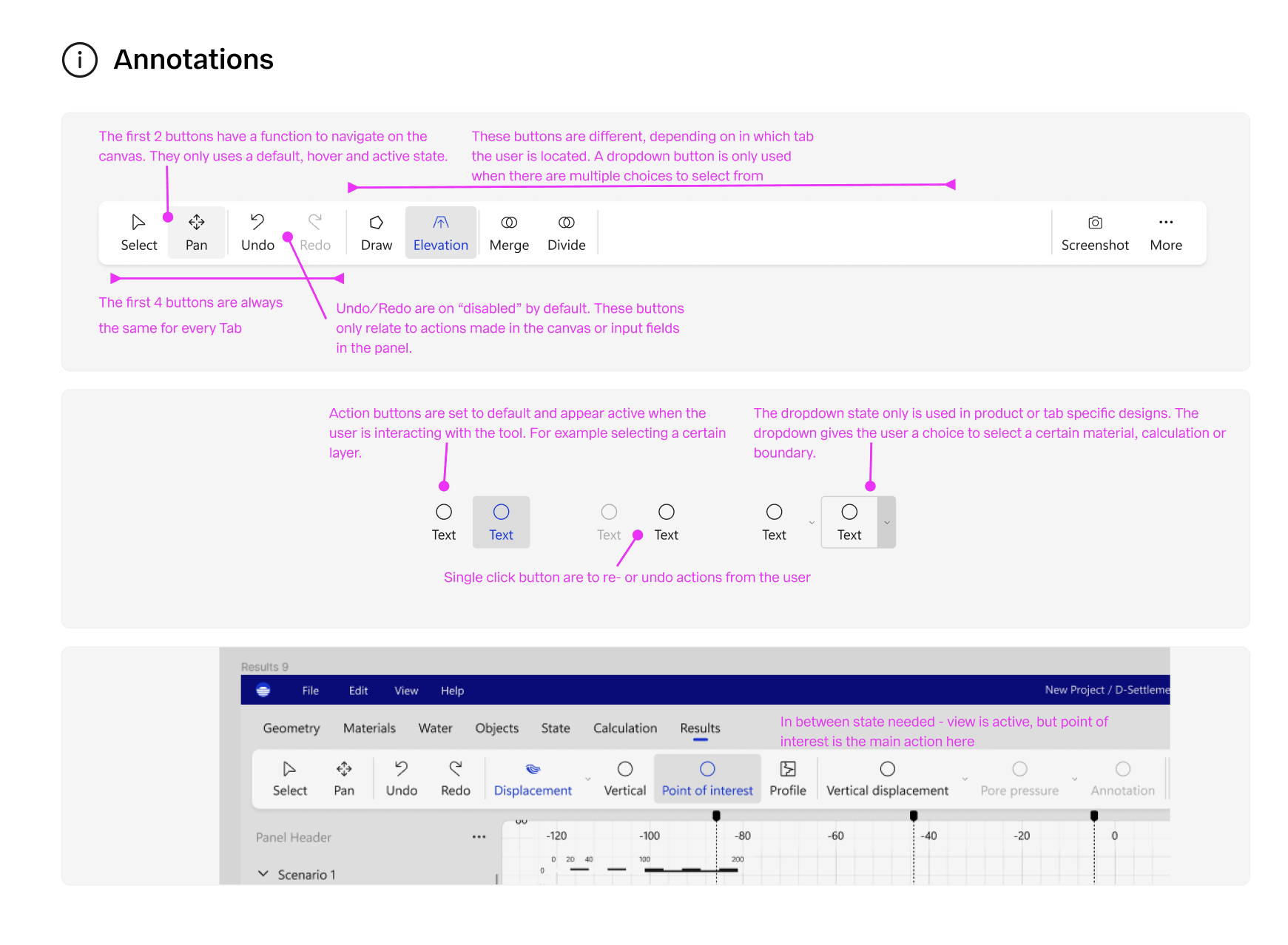
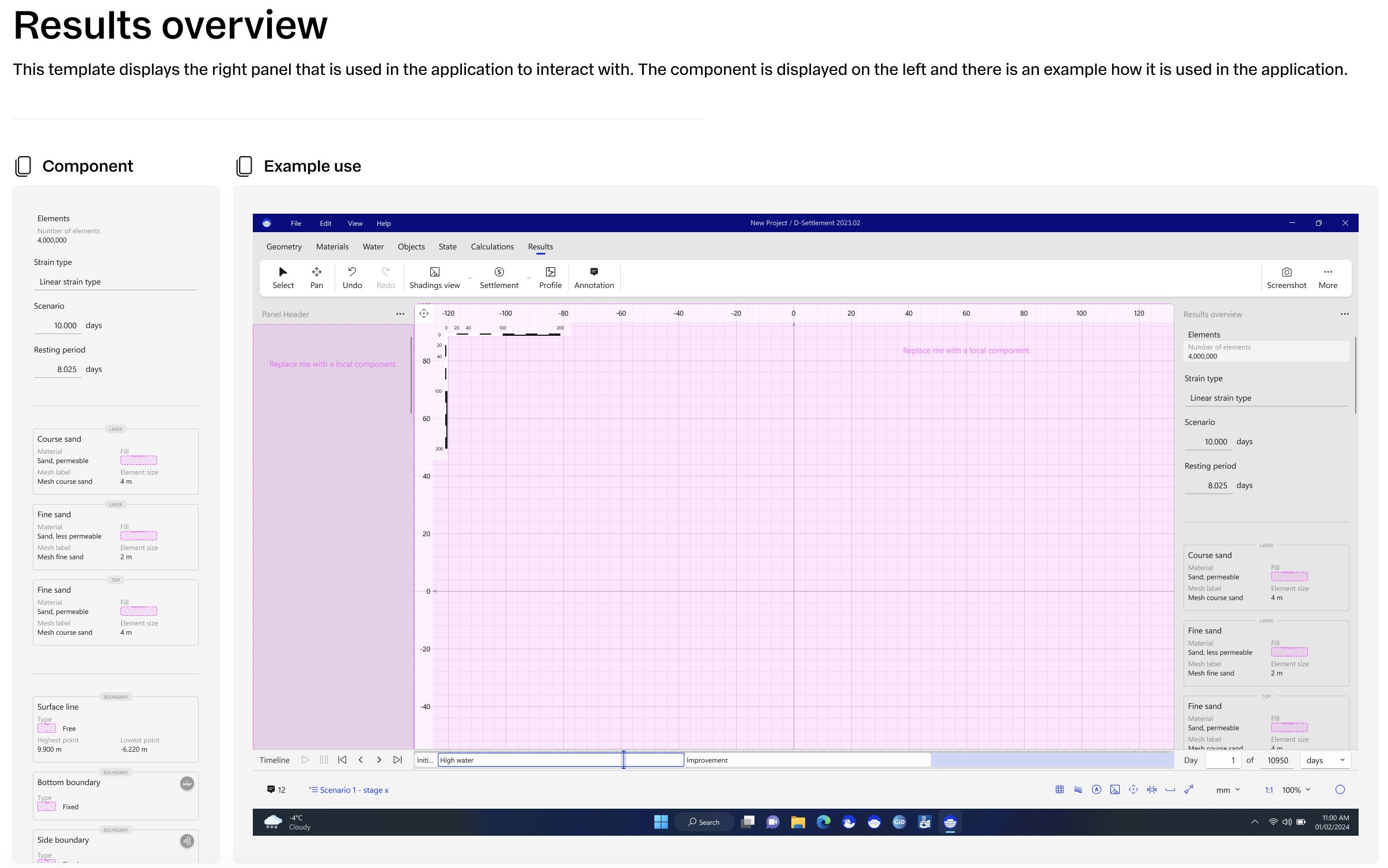
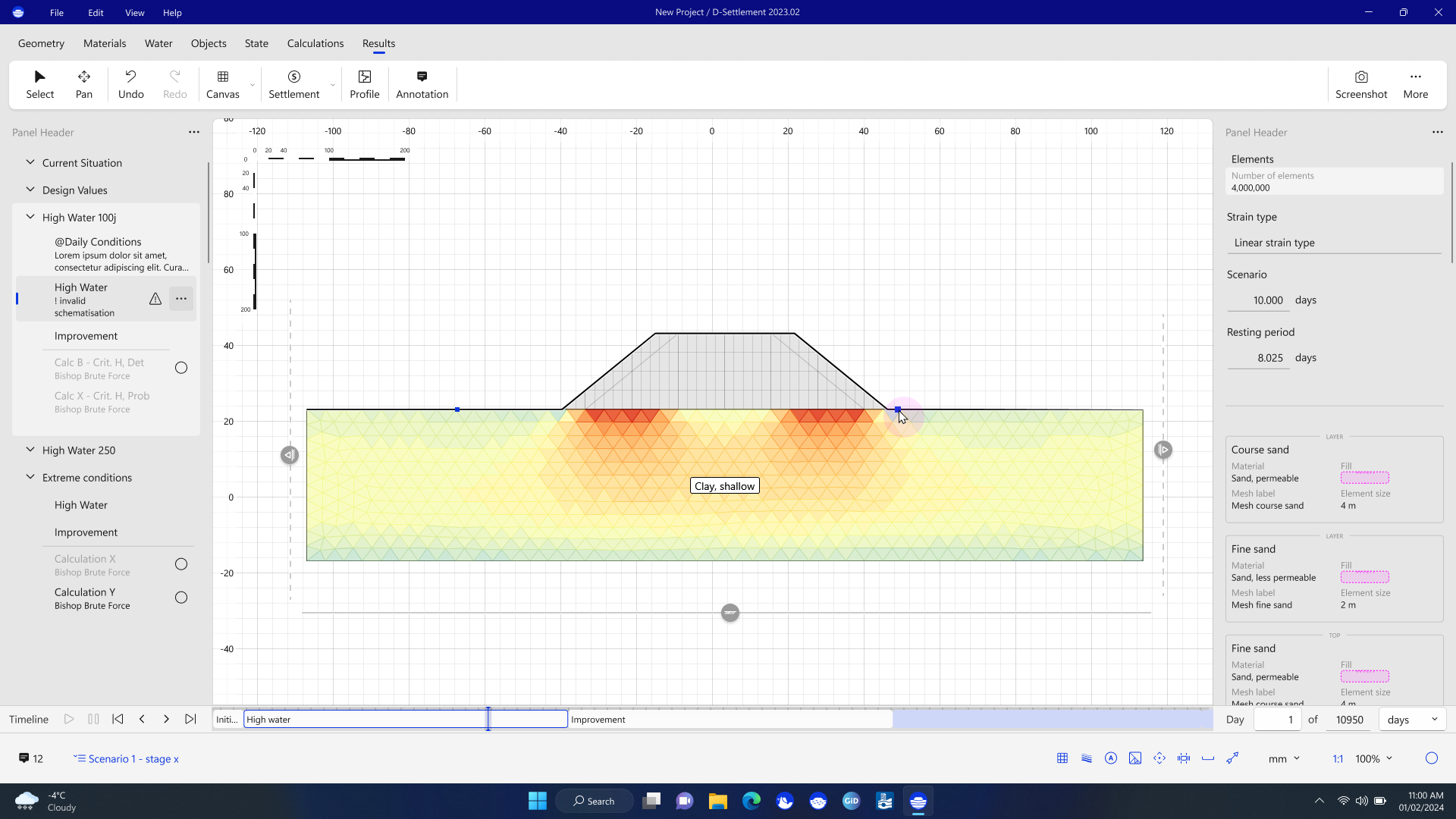
The new D-settlement design is based on Microsoft software packages. As you can see, we use the same structure here, and all the necessary tools are listed in the navigation bar at the top. Research and experience show that engineers need a familiar structure.
The biggest improvements we've made involve developing the following features:
Zooming in and out of the workspace. While sketching a situation, you can clearly view results by zooming in on so-called "anchor points." You can select these points to view the associated data, and the engineer also has the option to leave a note.
Field research revealed that engineers often set up multiple tabs for the same situation to provide different input. This allows them to compare the results of different calculations. We solved this by creating different "scenarios" in the left column, allowing them to easily switch between them within the same screen.

Deltares Design System
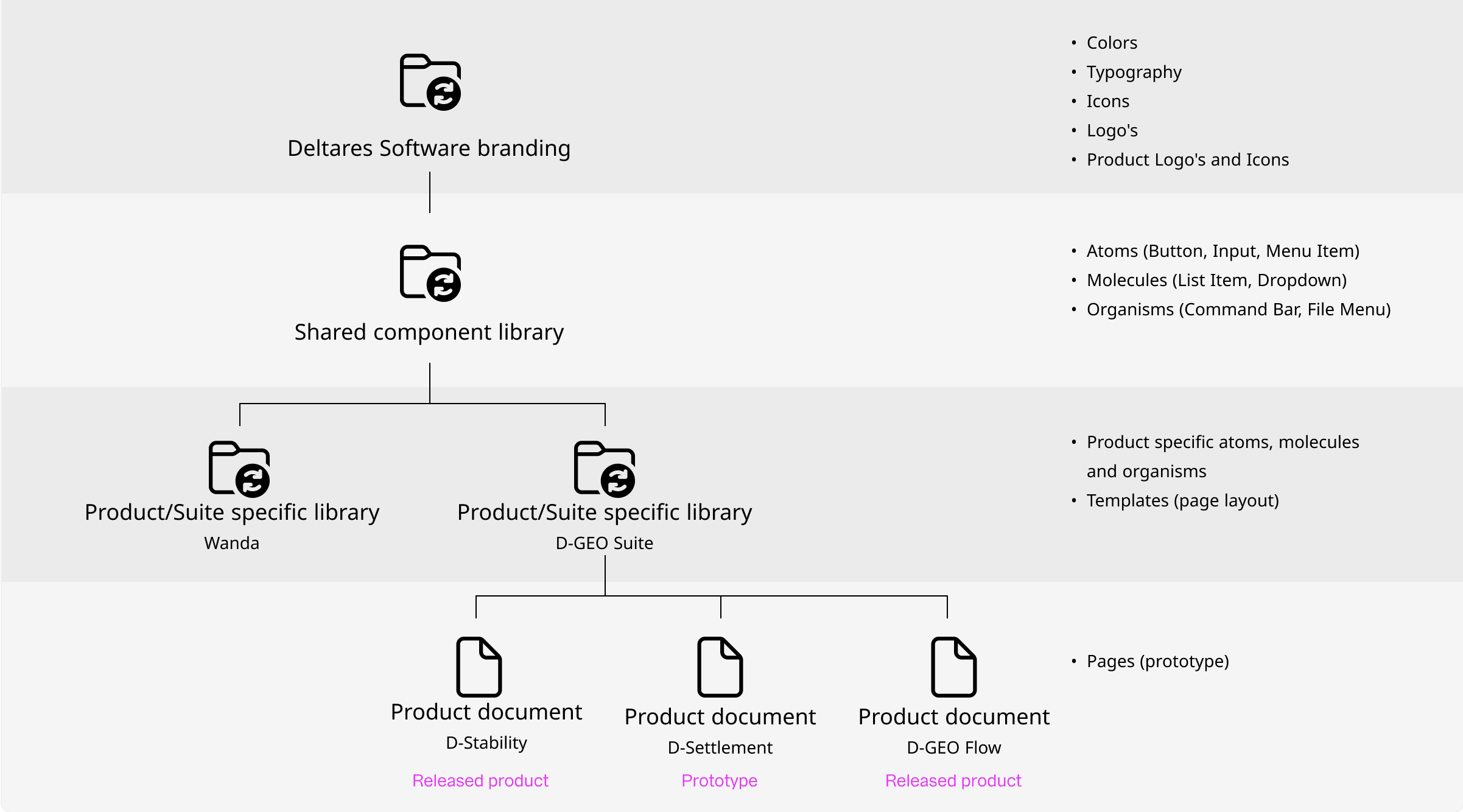
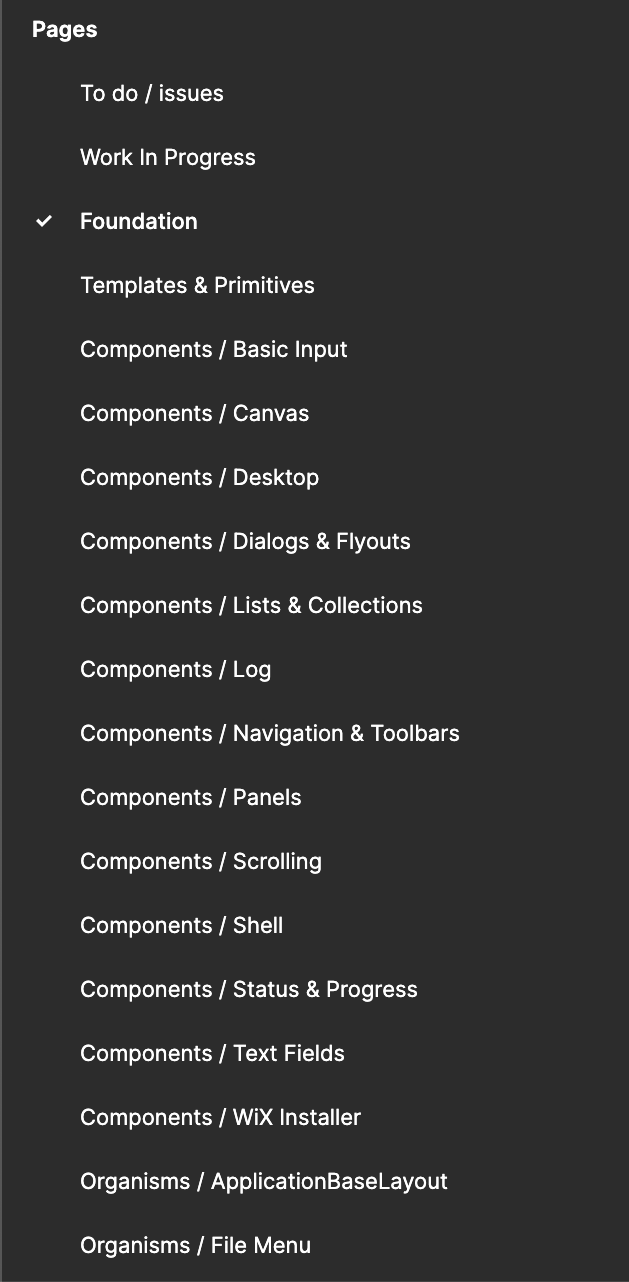
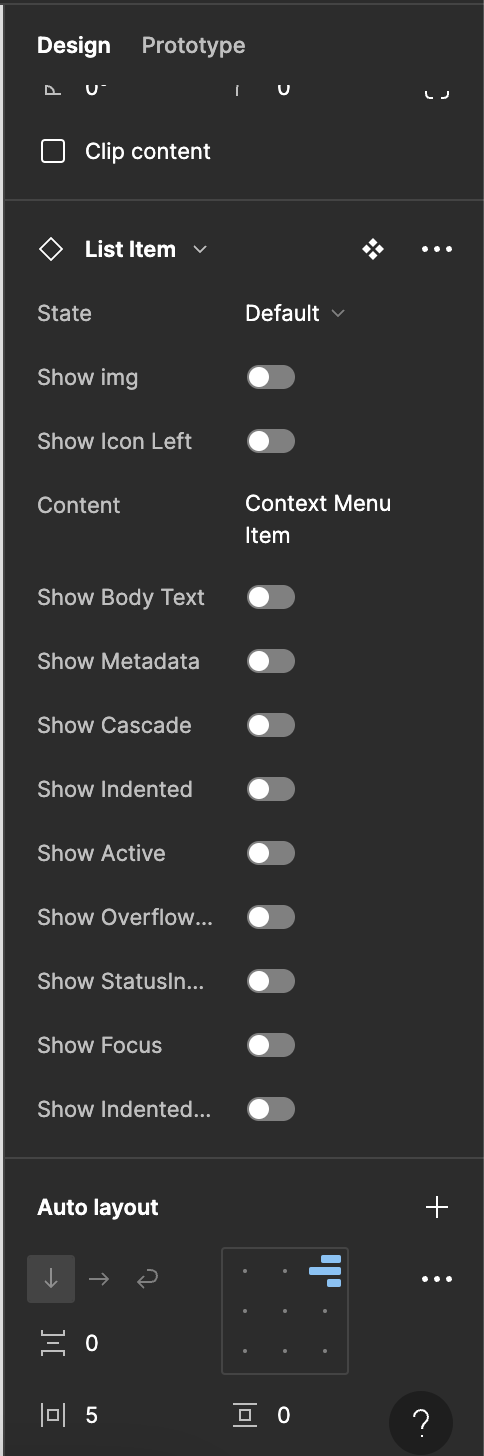
All the different applications in Deltares have their own library of components. A lot of the components used were similar. That is why I created a “shared components library”. This library gave a structured overview of how the basic application should look like. With all these “product-specific libraries“ I created a design system. This system is not only used by the designer, but also by developers and testers.
Creating a functional design system really stepped up our game as UX Designer. All the design choices we have made, together with the components from the different libraries, gave us no margin to create new designs or duplicate components. For new designers, a design system can serve as an onboarding tool, educating them on the product and principles, and enabling them to contribute sooner. As the system matures, it can provide teams with a shared vision and language that leads to better understanding and more consistent products. This, in turn, can increase trust with the people using your product, leading to a more engaged and loyal customer base over time.
Having a functional design system gave me the insight that this system brings the team closer together; we had fewer misunderstandings about design, flow and language.